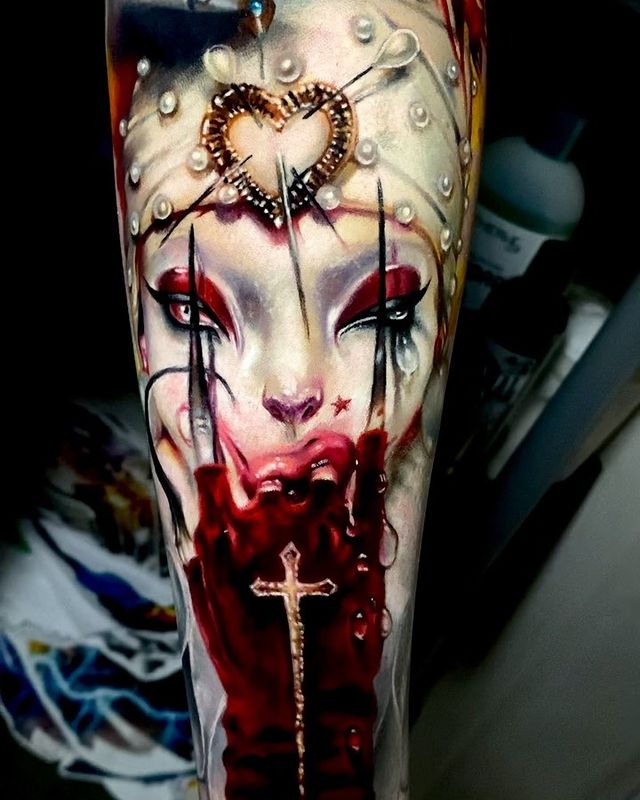
Andrei Stepanov
Andrei Stepanov is a highly skilled tattoo artist from Samara, Russia, specializing in realism and trashpolka styles. With over 100k followers on Instagram, he has earned a widespread reputation for his refined techniques and attention to detail. Renowned for his professionalism, Andrei takes pride in adhering to high standards of cleanliness in his practice.
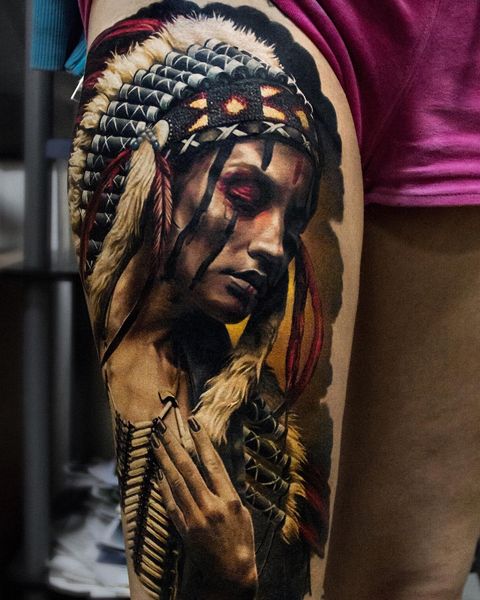
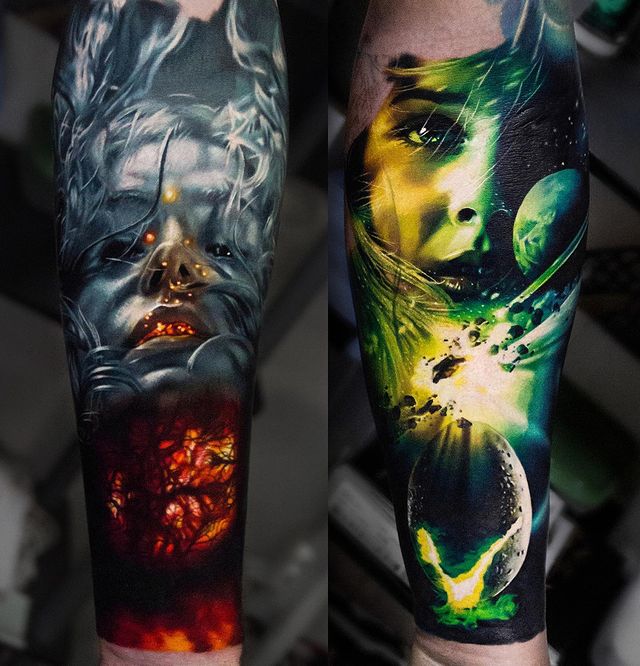
Andrei Stepanov is a tattoo artist based in Samara, Russia, specializing in realism and trashpolka styles. With over 116,000 followers on Instagram, he has built a significant following for his detailed, high-contrast work that blends photorealistic imagery with the bold graphic elements characteristic of trashpolka. His portfolio features portraits, animal studies, and compositional pieces that merge realistic rendering with typographic and abstract accents. Stepanov works independently in Samara, located in the Volga Federal District of Russia. For booking inquiries, pricing, or consultation details, contact him directly through his Instagram (@stepanovtattoo) or Facebook page.
History & Origins
Trashpolka emerged in the late 1990s from Germany, created by Simone Pfaff and Volker Merschky at their Buena Vista Tattoo Club in Würzburg. The style fuses realism with chaotic graphic elements, drawing from punk aesthetics, collage art, and print media. Red and black dominate the palette, with splatters, typography, and geometric shapes layered over photorealistic imagery. Andrei Stepanov adopted this style and merged it with his foundation in realism, a tattoo tradition that traces back to the photorealistic portraiture pioneered by artists like Bob Tyrrell and Nikko Hurtado in the early 2000s. Realism in tattooing demands an understanding of light, shadow, and depth that goes beyond what most styles require. Stepanov's location in Samara, a city on the Volga River with a growing creative community, has given him a base to develop his dual specialization. His 116,000-plus Instagram following reflects how his interpretation of these two demanding styles resonates with collectors worldwide. The combination is rare. Most artists lean into one or the other. Stepanov moves between them, and often within the same piece, which is what makes his work stand out.
Defining Characteristics
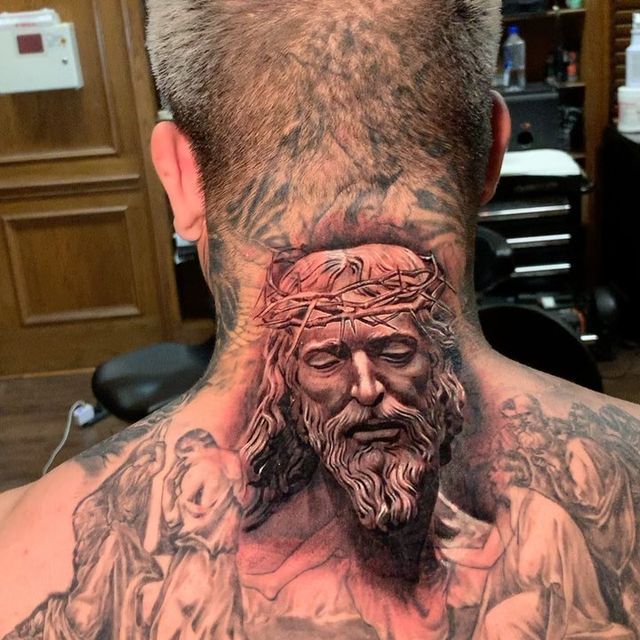
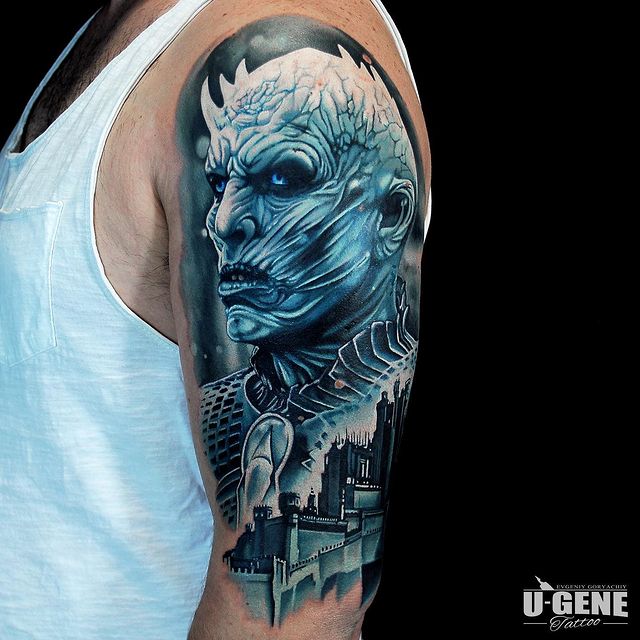
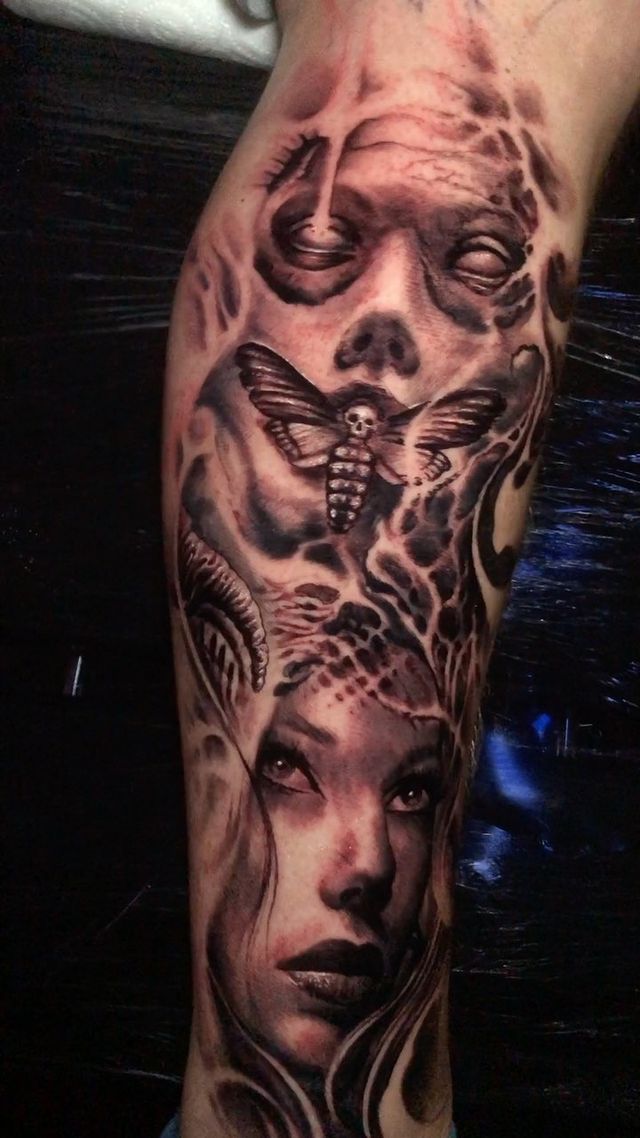
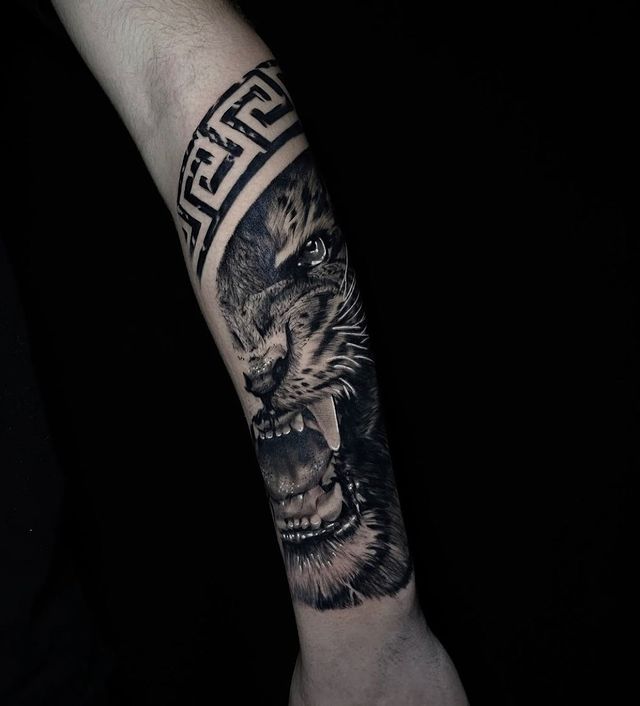
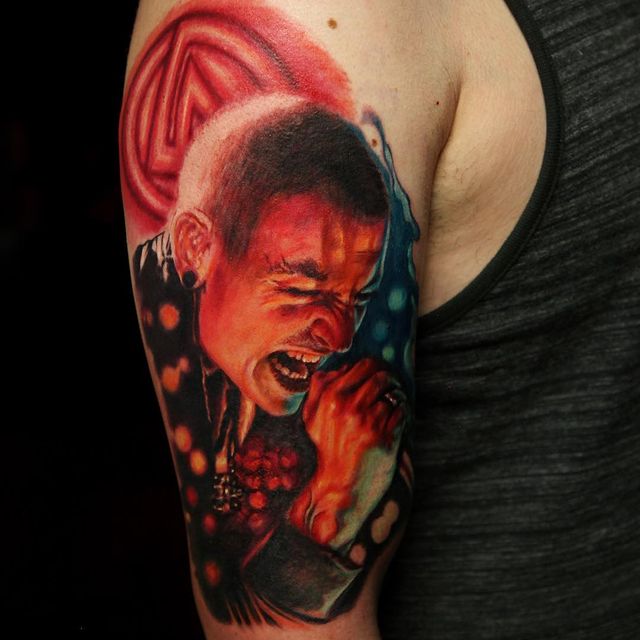
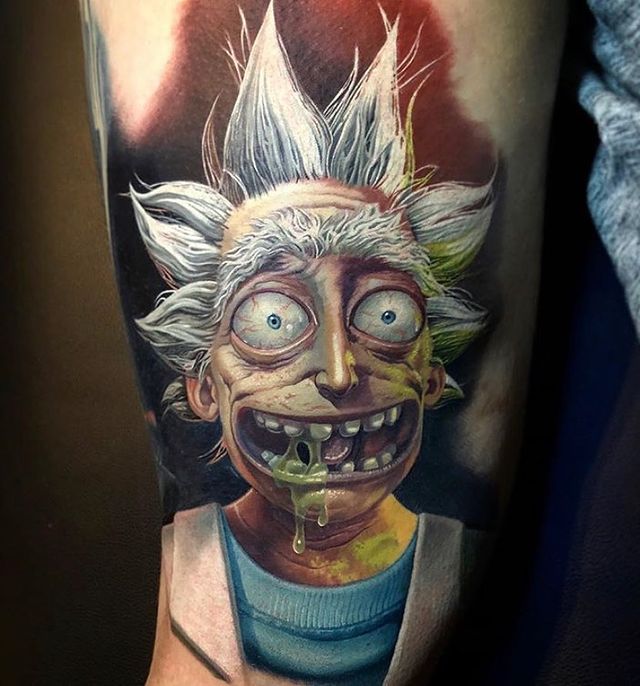
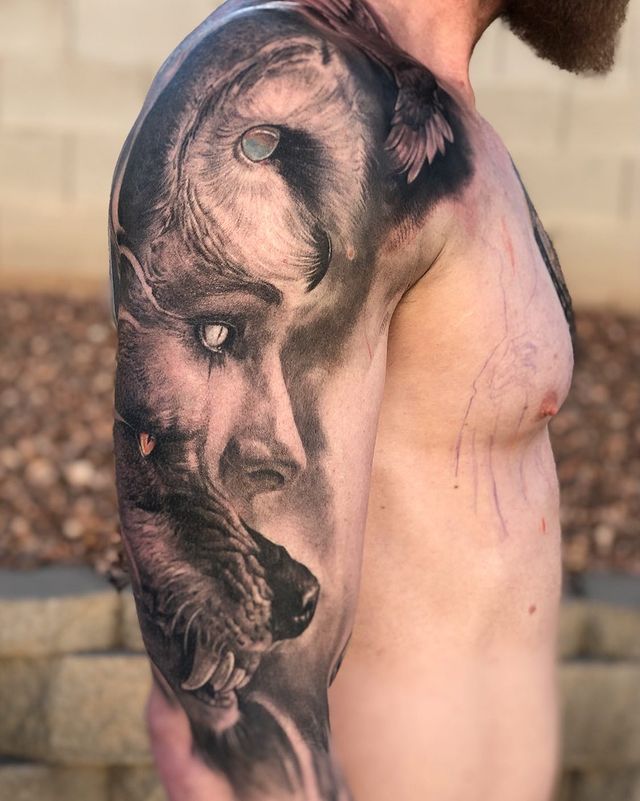
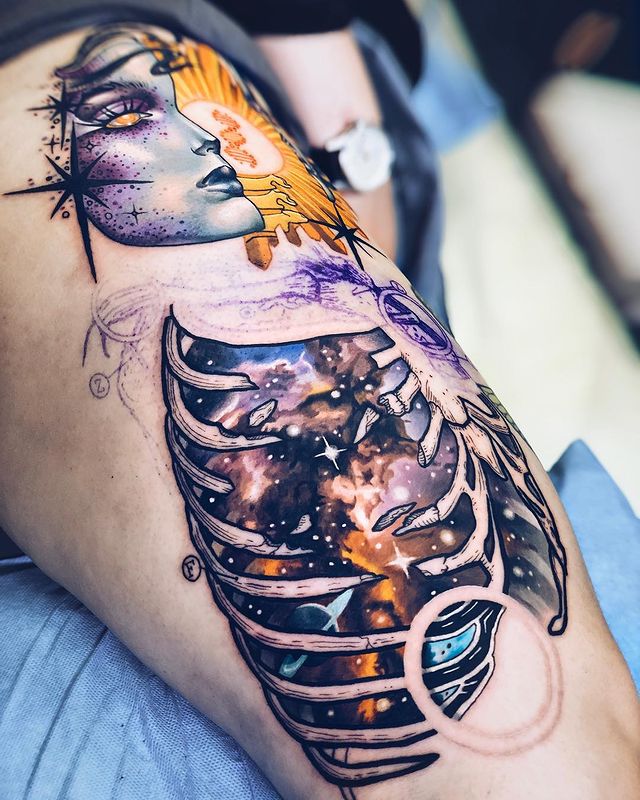
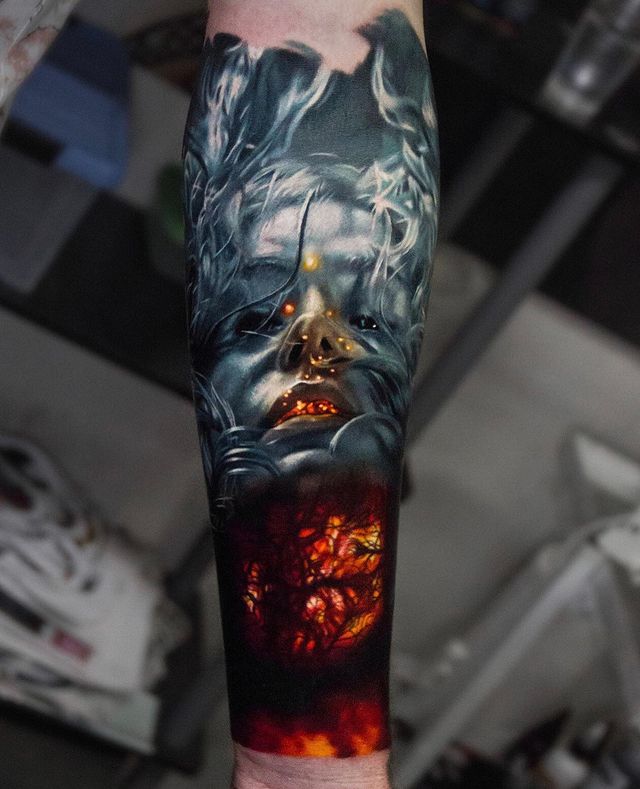
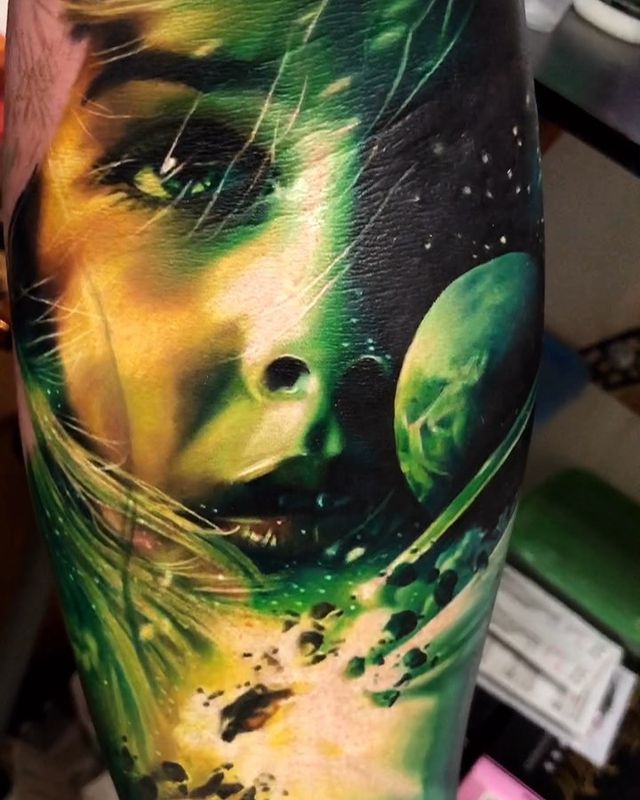
Stepanov's work sits at the intersection of two demanding styles. His realism pieces show tight control over value and texture. Skin tones render with smooth gradients, eyes catch light with precision, and hair flows with individual strand detail. These are the markers of someone who has spent years studying how light falls on form. When he shifts into trashpolka, the contrast is sharp. Black ink sits in heavy blocks. Red accents cut through compositions like headlines. Typographic elements, brush strokes, and geometric fragments overlay or frame the realistic imagery. The tension between the controlled realism and the chaotic graphic layer is where his work gets interesting. A portrait might be rendered with photographic accuracy, then disrupted by a slash of red or a fragmented word. This push and pull creates visual energy that straight realism sometimes lacks. His follower count, over 116,000 on Instagram, suggests that collectors respond to this combination. It is not a style for everyone. The boldness of trashpolka elements means these tattoos carry visual weight. They command attention rather than blend in.
Popular Motifs & Subjects
Portraits dominate Stepanov's portfolio. He tattoos faces with the kind of detail that makes you look twice to confirm it is ink on skin, not a photograph. These range from celebrity portraits to personal commissions of family members and loved ones. Animal realism is another strong category. Lions, wolves, and eagles appear frequently, rendered with the same attention to fur texture and eye reflection that he brings to human subjects. In his trashpolka work, the motifs shift. The realistic core often remains, a face, an animal, a figure, but the surrounding elements change. Typography in various languages, abstract brush strokes, geometric shapes, and splatter effects frame the central image. Religious and philosophical iconography shows up as well. Skulls, classical sculptures, and symbolic objects give his trashpolka pieces narrative weight beyond the visual impact. The mix of recognizable imagery with fragmented graphic elements creates tattoos that read like poster art. Each piece tells a story, or at least suggests one, which is part of what draws collectors to this style.
Placement & Sizing
Realism and trashpolka both demand space. The level of detail in Stepanov's realistic work requires room for value transitions, texture rendering, and proper proportions. A photorealistic portrait compressed into a small area loses the subtlety that makes it work. The same applies to trashpolka. The graphic elements, the type, the splatters, the layered compositions, need surface area to breathe. Most of Stepanov's larger pieces occupy the forearm, upper arm, thigh, or back. These placements offer the canvas size his styles require. Smaller pieces exist in his portfolio, but they tend to be simplified compositions rather than the full expression of either style. For collectors considering his work, think about commitment. A full trashpolka sleeve from Stepanov is a statement piece. It will be visible, bold, and unmistakable. A realistic portrait on the inner forearm carries similar weight in a more contained format. Placement also affects how the trashpolka elements age. High-contrast black and red holds up well over time, but fine details in realism can soften. Discuss sizing and longevity with him directly during consultation.
Choosing Andrei Stepanov
Working with Stepanov means committing to a specific aesthetic. His dual specialization in realism and trashpolka is not common. If you want a portrait that looks like a photograph, he can deliver. If you want that same portrait disrupted by bold graphic elements, red slashes, and typographic fragments, he can do that too. The decision comes down to what you want on your skin and how much visual impact you are comfortable carrying. Contact him through Instagram (@stepanovtattoo) or Facebook to discuss your concept. Be prepared with reference images and a clear idea of placement and size. Artists working at this level of detail and demand typically want focused, well-thought-out inquiries rather than vague requests. For collectors outside Samara, factor in travel. Stepanov works in the Volga Federal District of Russia. If you cannot travel, browse the tattoo artist directory on Inksy to find realism or trashpolka specialists closer to you. If you are still exploring what style fits you, try the AI tattoo generator to visualize concepts before reaching out to any artist.
Explore more
Frequently Asked Questions
What styles does Andrei Stepanov specialize in?
Andrei Stepanov specializes in realism and trashpolka tattoo styles. His work combines photorealistic rendering with the bold, high-contrast graphic elements that define trashpolka, creating pieces that blend detailed imagery with typographic and abstract accents.
How can I book an appointment with Andrei Stepanov?
Contact Andrei Stepanov directly through his Instagram (@stepanovtattoo) or his Facebook page (facebook.com/stepanovtattoo) for booking inquiries, pricing, and availability. He works independently in Samara, Russia.
Where is Andrei Stepanov based?
Andrei Stepanov is based in Samara, a city in the Volga Federal District of Russia. He works as an independent tattoo artist without a listed shop affiliation.
What is trashpolka tattoo style?
Trashpolka is a tattoo style that originated in Germany, combining realistic imagery with bold graphic elements like red and black color fields, typography, and abstract brushstrokes. Andrei Stepanov is known for blending this style with his realism expertise.
How popular is Andrei Stepanov on social media?
Andrei Stepanov has over 116,000 followers on Instagram (@stepanovtattoo), reflecting a strong reputation and demand for his work in the realism and trashpolka tattoo community.