Carl Grace
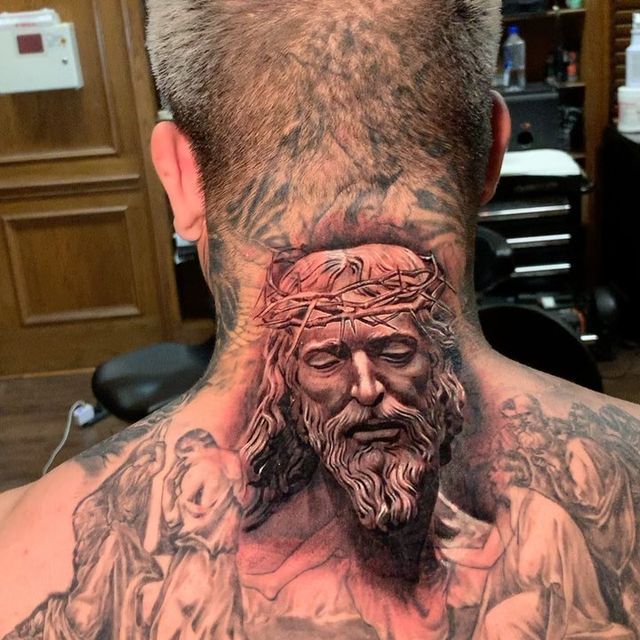
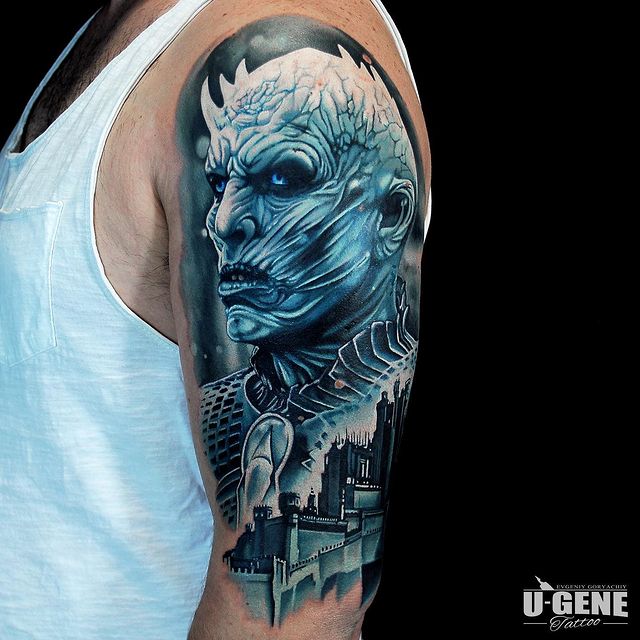
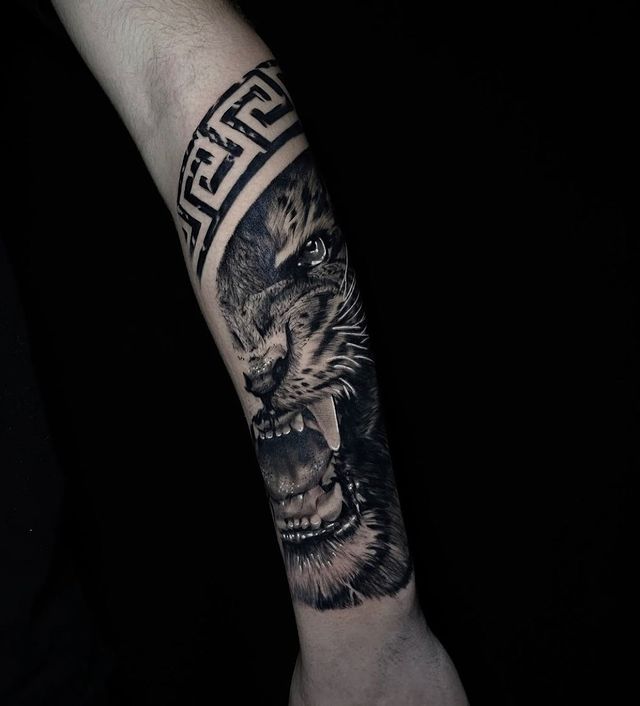
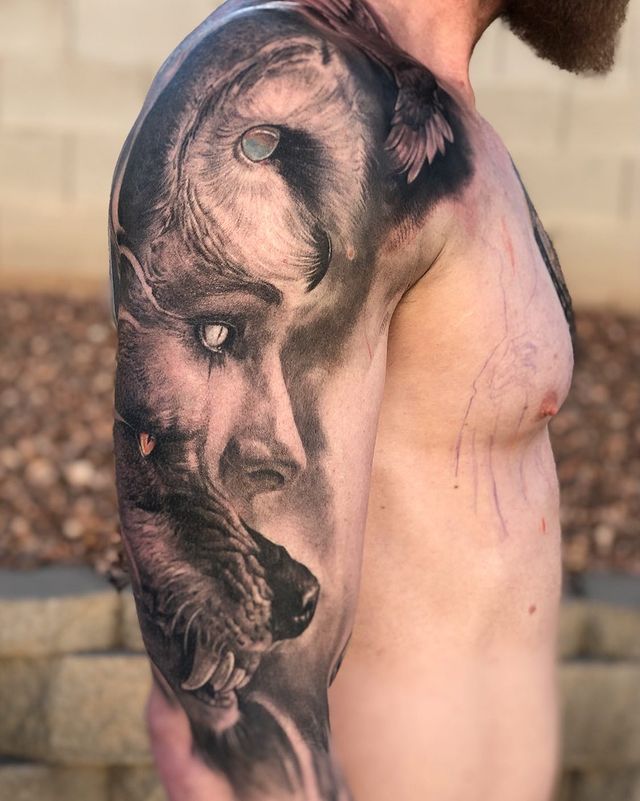
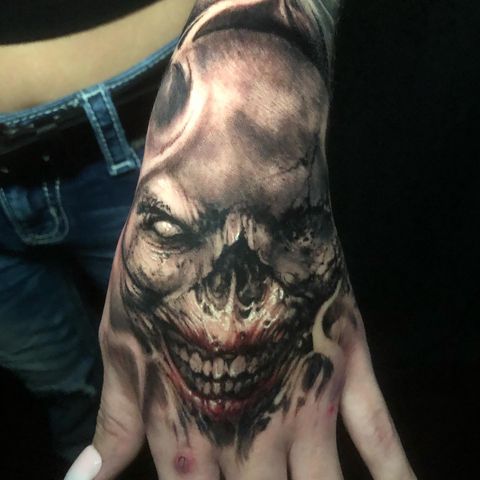
Carl Grace, a renowned tattoo artist based in Las Vegas, is known for his unique styles in black&gray, realism, and trashpolka. With his remarkable skills honed over 17 years, he showcases his passion and talent through stunning body art. His impressive portfolio has garnered the attention of over 300,000 followers on Instagram, further signifying his remarkable knack for tattooing.
Carl Grace is a tattoo artist based in Las Vegas, Nevada, recognized for his work in black&gray, realism, and trashpolka. With over 300,000 followers on Instagram, he has built a strong reputation for detailed portrait work and bold trashpolka compositions. His approach combines photorealistic shading techniques with the graphic, high-contrast elements that define trashpolka as a style. Grace operates independently in Las Vegas. His portfolio ranges from hyper-realistic portraits to mixed-media pieces that blend text, imagery, and abstract forms. For booking inquiries, contact the artist directly through his Instagram or podcast website.
History & Background
Carl Grace has established himself as a recognizable name in the Las Vegas tattoo scene, primarily through his mastery of black&gray realism and trashpolka. His Instagram presence, now exceeding 300,000 followers, documents years of work across portrait tattoos, mixed-media compositions, and experimental pieces that push beyond conventional style boundaries. Las Vegas has long attracted tattoo artists who thrive on bold, attention-grabbing work, and Grace fits that tradition while maintaining technical precision. He also runs a podcast through Podbean, where he discusses tattoo culture, art, and his perspective on the industry. That platform gives clients and fans direct access to his thinking, not just his portfolio. For artists at his level, building an audience outside the shop chair has become essential, and Grace has done that through consistent output and a willingness to engage publicly with both the craft and the community around it.
Defining Characteristics
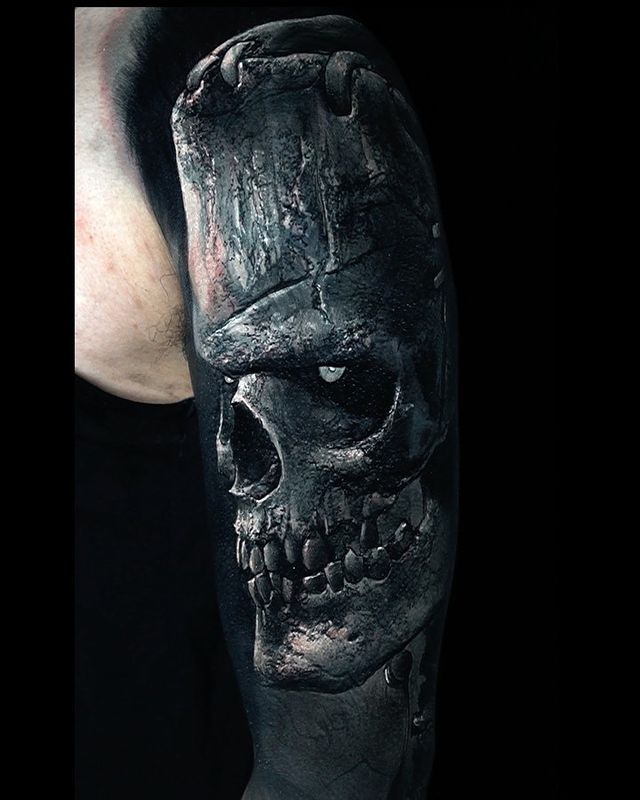
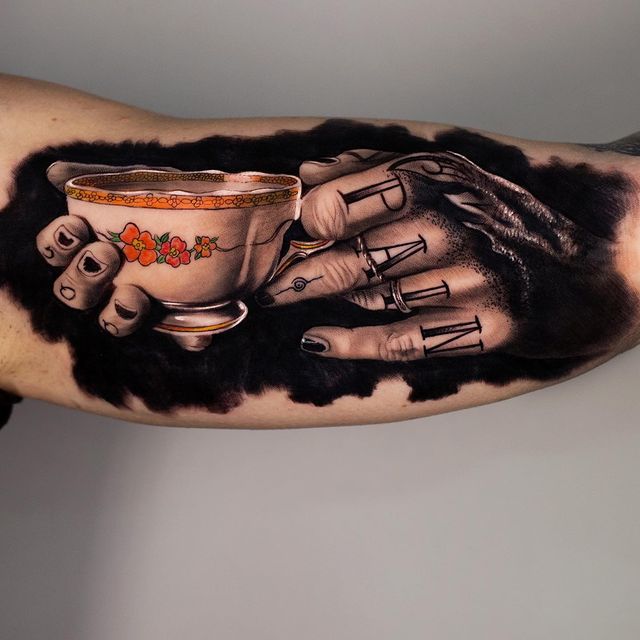
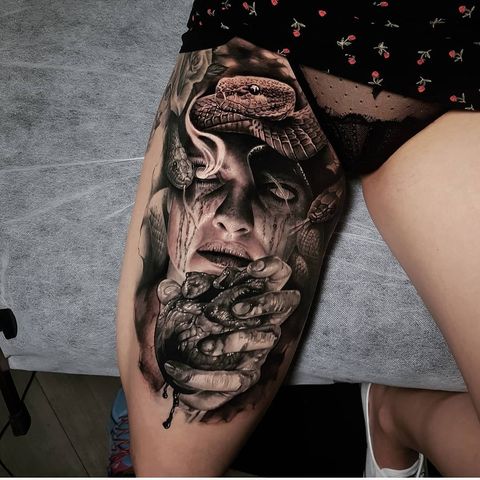
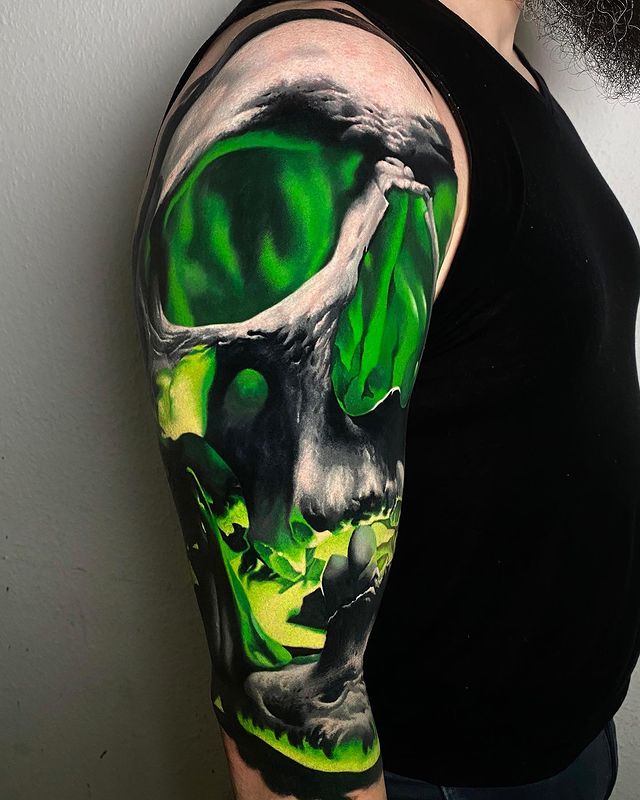
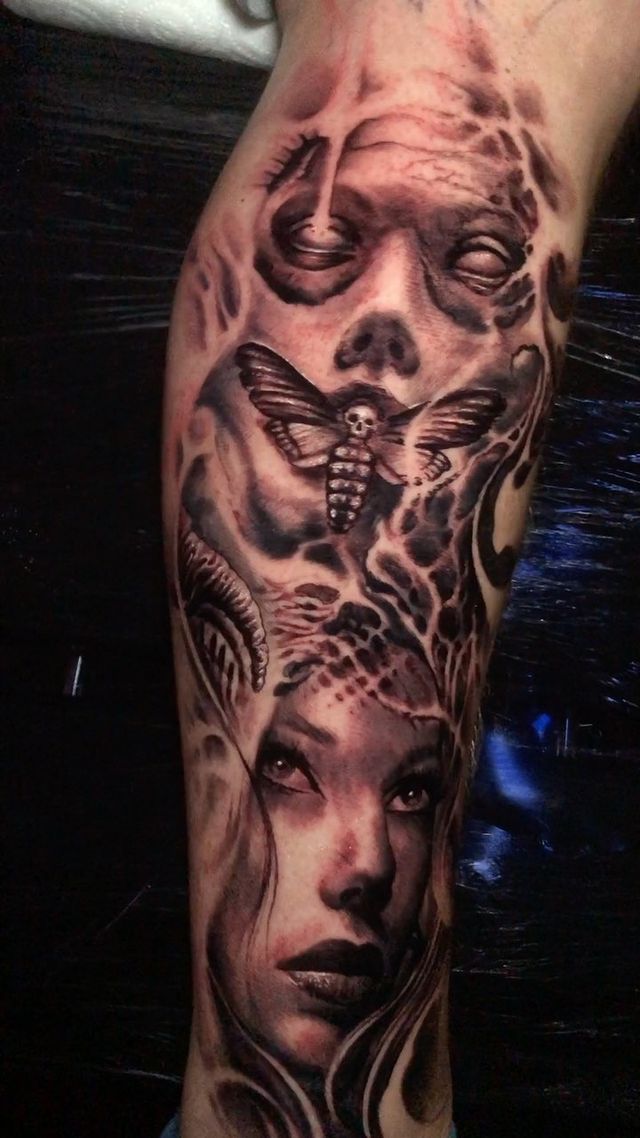
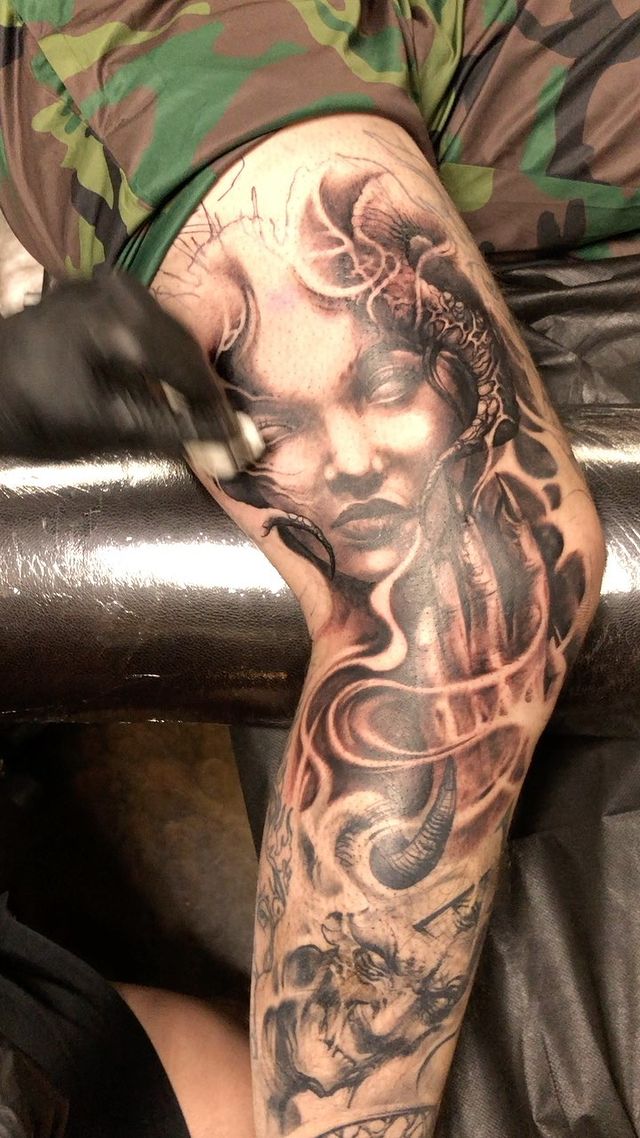
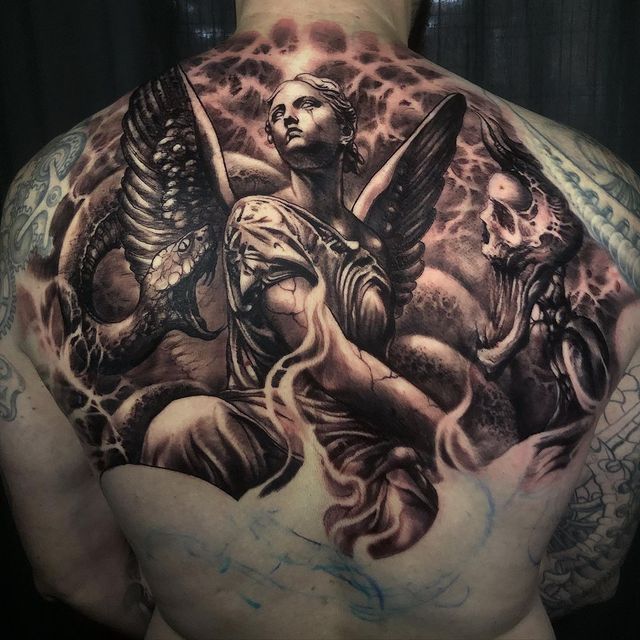
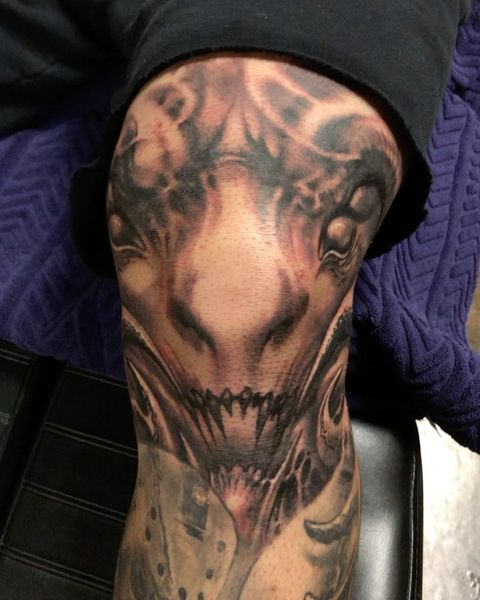
Three styles define Carl Grace's portfolio: black&gray, realism, and trashpolka. Each demands different technical skills, and the combination sets him apart from artists who stick to one lane. His black&gray work relies on smooth gradient transitions and controlled contrast. No color, just value. His realism, particularly portraiture, requires accurate proportion and the ability to render skin texture, light, and shadow convincingly on a curved surface. Trashpolka is where things get interesting. The style mixes photorealistic elements with chaotic, graphic additions: bold red accents, torn paper effects, typographic fragments, and splatter. It looks like a collage that someone attacked with a blade and a brush. Grace moves between these approaches, sometimes combining them. A piece might start with a realistic portrait and end with trashpolka overlays. That versatility is rare. Most artists pick a lane. Grace works across three and merges them when the concept calls for it.
Popular Motifs & Subjects
Portraits dominate Carl Grace's portfolio. He tattoos faces with the kind of detail that makes you double-take, checking whether it is a photograph or ink on skin. These range from celebrity likenesses to personal memorial pieces for clients. Beyond portraiture, his trashpolka work incorporates a different visual vocabulary: fragmented text, newspaper clippings, geometric overlays, and splattered red ink that references both punk aesthetics and fine art collage traditions. Religious iconography, skulls, and figurative studies also appear throughout his body of work. The trashpolka pieces often layer these motifs together, creating compositions that feel dense and intentional rather than random. His black&gray pieces tend toward the cleaner side, letting the shading carry the weight without the graphic noise. Clients seeking realism portraits or mixed-media trashpolka designs will find the strongest alignment with his demonstrated output.
Understanding Trashpolka as a Style
Trashpolka deserves explanation because it remains misunderstood outside tattoo circles. The style was created in the 1990s by German artists Simone Pfaff and Volker Merschky, who operated under the name Buena Vista Tattoo Club. It combines realistic imagery with chaotic, graphic elements drawn from collage art, punk posters, and Dadaist disruption. The palette is typically limited to black and red. Common visual devices include torn edges, typographic fragments, brush strokes, and splatter effects layered over photographic or realistic tattoo work. The result looks intentionally unfinished, as if the design is falling apart or being assembled in real time. It is not messy. The chaos is composed. Carl Grace works in this tradition, applying his realism foundation as the anchor point and building the graphic disruption around it. Understanding trashpolka helps clients decide whether the aesthetic matches their taste. It is loud, confrontational, and not for everyone. Browse tattoo ideas across styles to compare before committing.
Choosing an Artist for Black & Gray Realism in Las Vegas
Selecting a tattoo artist for black&gray realism requires looking beyond follower counts. Carl Grace has the audience and the portfolio, but the fit depends on what you want tattooed and how you want the process to feel. Start by reviewing his Instagram feed thoroughly, not just the highlights. Look at healed work, not just fresh pieces. Realism ages differently depending on technique, ink saturation, and placement. Check whether his portrait style matches your reference material. Some realism artists lean dramatic with heavy contrast. Others favor softer, more photographic rendering. Grace tends toward the dramatic, which suits trashpolka but may not fit every black&gray request. Las Vegas has a deep roster of tattoo artists. Use the artist directory to compare specialties, locations, and portfolios side by side. If black&gray realism is your priority, filter for artists who list that style first, not third. Contact the artist directly to discuss your concept before committing to a consultation.
Explore more
Frequently Asked Questions
What tattoo styles does Carl Grace specialize in?
Carl Grace specializes in three styles: black&gray, realism, and trashpolka. His black&gray work focuses on smooth gradients and photorealistic shading. His realism covers portraits and detailed representational pieces. His trashpolka blends graphic, high-contrast elements with realistic imagery, text, and abstract forms.
Where is Carl Grace located?
Carl Grace is based in Las Vegas, Nevada. He operates as an independent artist. Contact him directly through his Instagram (@carlgracetattoos) or his podcast website for studio location and booking details.
How do I book a tattoo appointment with Carl Grace?
Contact Carl Grace directly through his Instagram account (@carlgracetattoos) or his podcast website at unclecarltruth.podbean.com. Booking procedures, pricing, and availability are handled through those channels. Do not assume walk-ins are available. Reach out directly to discuss your design and schedule.
What is trashpolka tattooing?
Trashpolka is a tattoo style that originated in Germany, combining realistic imagery with graphic, chaotic elements like text, splatters, bold lines, and abstract shapes. It often uses only black and red ink. Carl Grace is one of the artists known for working in this style, blending his realism skills with the raw, collage-like aesthetic that defines trashpolka.
How popular is Carl Grace on social media?
Carl Grace has over 300,000 followers on Instagram (@carlgracetattoos). This following reflects significant visibility in the tattoo community, particularly for his black&gray realism and trashpolka work.