1/4 • Click to zoom
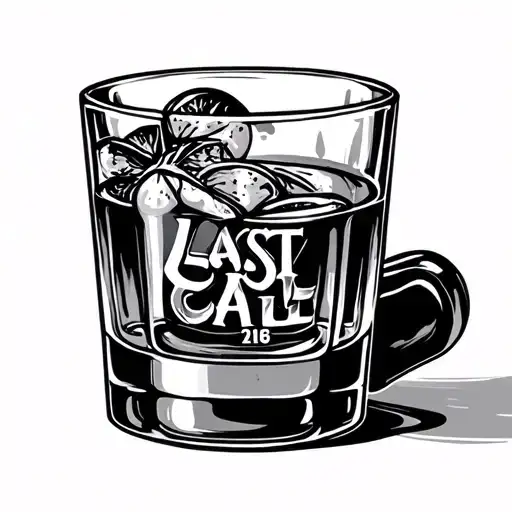
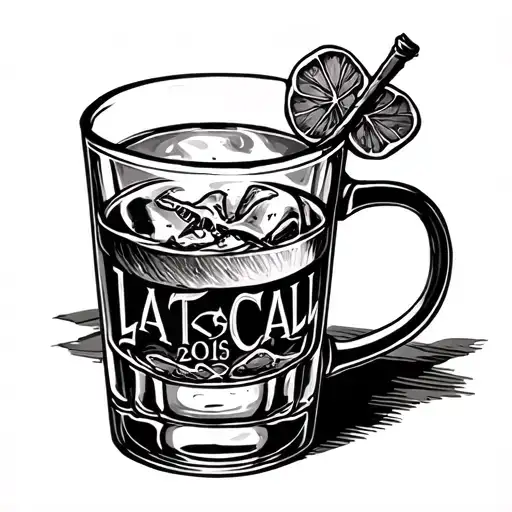
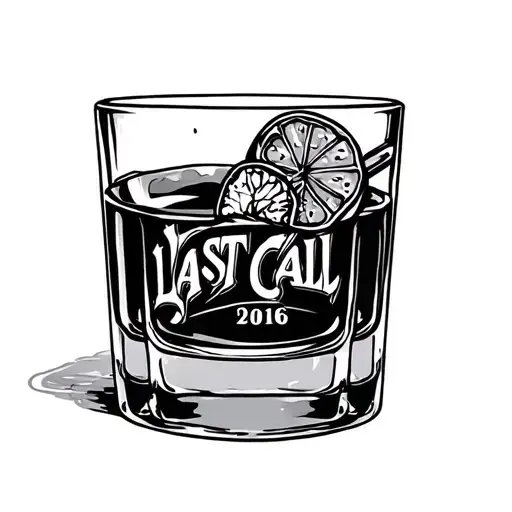
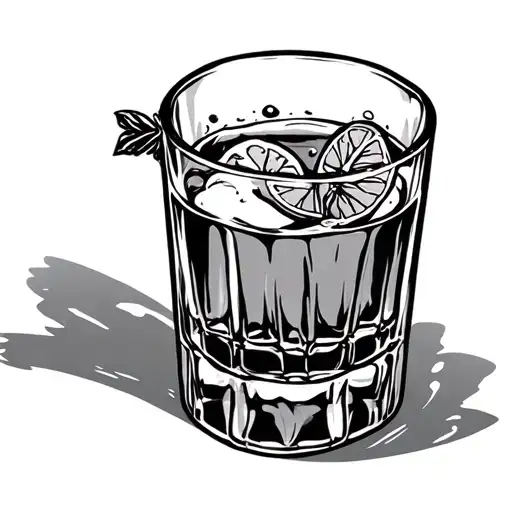
Capturing the clarity of spirits and the weight of memory, this design renders a whiskey glass with meticulous attention to light refraction and liquid density. Executed in black and grey, the piece relies on smooth shading gradients to mimic the transparency of glass without relying on color. The inclusion of 'Last Call 2016' transforms a standard object study into a commemorative marker, suggesting a specific moment in time preserved permanently. Ideal for those seeking a balance between illustrative detail and meaningful symbolism, the composition works best on flat canvas areas where the geometry of the glass remains undistorted. Technical execution requires precise needle control to achieve the glossy highlights characteristic of wet surfaces. Placement considerations focus on maintaining the structural integrity of the glass shape, avoiding high-movement zones that could warp the circular rim over time. Whether chosen to mark a personal milestone or simply appreciating the aesthetic of classic barware, this design offers a sophisticated approach to object realism. The contrast levels allow for strong visibility even as the ink settles, ensuring the '2016' typography remains legible throughout the aging process.
Noticeable discomfort, prepare for some sensitivity
Expect moderate discomfort primarily during the shading phases required for glass transparency. The outer forearm and calf feature thicker skin with lower nerve density, keeping pain manageable for most clients. Sensation resembles a persistent scratch rather than sharp stinging. Maintain steady breathing during gradient work to minimize tension. Topicals are rarely needed.
For optimal geometric integrity, place this square-composition design on flat surfaces with minimal skin elasticity. The outer forearm offers excellent visibility and a stable canvas for the glass's straight lines and circular rim. Calf placements provide ample space for shading gradients while remaining easily concealable for professional settings. Avoid high-flexion areas like the inner elbow or wrist creases, as distortion may warp the glass shape over time. Minimum size should be 4 inches to preserve text legibility and shading detail. Larger dimensions allow for smoother transitions in the liquid refraction effects.
realism is a distinctive tattoo style characterized by Realism: Photorealistic tattoos that mimic photographs with exceptional detail, shading, and dimension. These technically demanding designs create the illusion of 3D imagery on skin, showcasing incredible artistic skill. Blackwork: Blackwork tattoos use exclusively black ink to create bold, graphic designs ranging from intricate patterns to large solid areas. This versatile style encompasses geometric patterns, illustrative work, and heavy coverage pieces that make powerful visual statements.. This style has gained popularity for its versatility and visual appeal.
Yes, this design is well-suited for square placement. This realism design is ideal for square placement. Consider consulting with a professional tattoo artist about the best placement for this design.
The duration depends on the size, complexity, and detail level. A design of this style typically requires 2-4 hours for a medium-sized piece, but consult with your artist for an accurate estimate.
Tattoo pricing varies by artist, location, and design complexity. Prices typically range from $150-$500+ for a design of this style. Always consult with your chosen artist for an accurate quote.
Proper aftercare is crucial for square tattoos. Keep the area clean, moisturized, and protected from sun exposure. Follow your artist's specific aftercare instructions for best results.
square
square