1/4 • Click to zoom
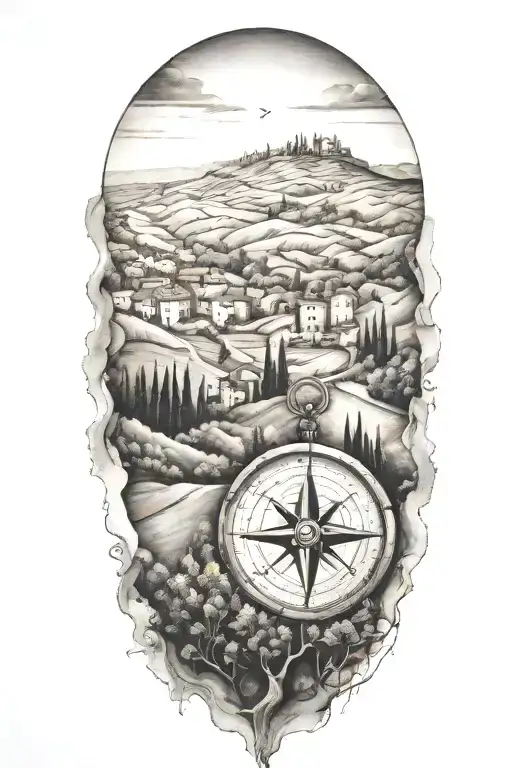
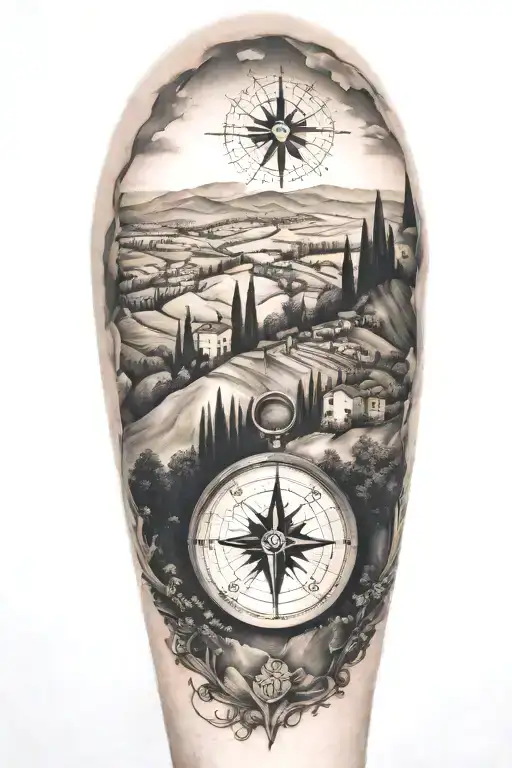
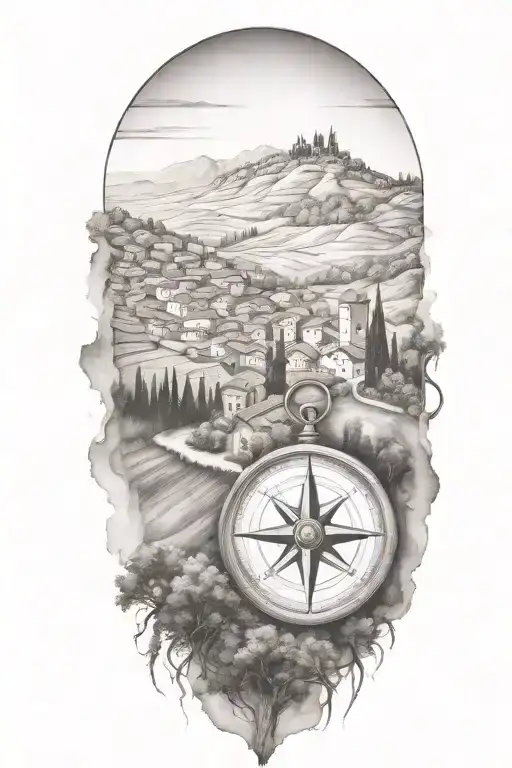
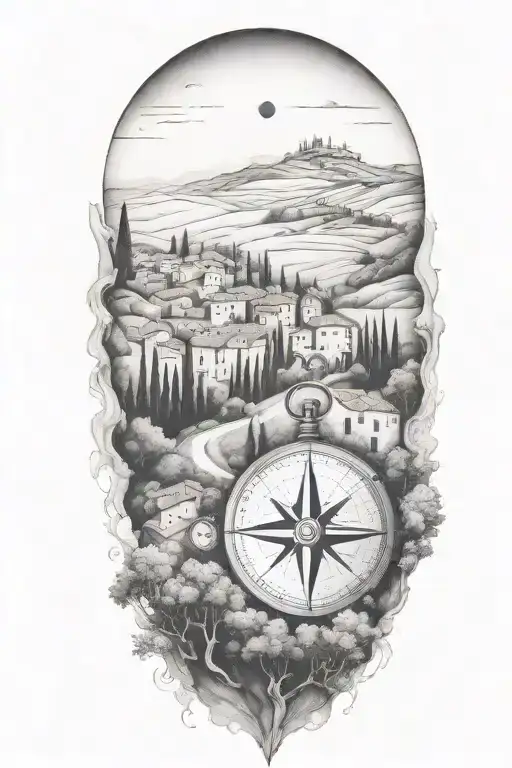
Capture the essence of Tuscany without leaving home. This black-grey design merges rolling hills and cypress trees with a navigational compass, creating a piece that balances wanderlust with grounding. Soft fading edges allow the landscape to breathe on the skin, avoiding harsh boundaries while maintaining structural integrity. The compass serves as a focal point, symbolizing direction amidst life's journey. Ideal for those seeking meaningful travel ink or homage to Italian heritage. Placement on the outer bicep or thigh provides enough canvas width for the horizon line to stretch naturally. Shading techniques create depth in the foliage and distance in the hills. This illustrative approach suits clients wanting realism without rigid outlines. Consider size carefully to ensure tree details remain distinct over time. A timeless choice for adventurers and dreamers alike. The gradient work requires an artist skilled in smooth transitions to prevent muddying over years. Proper aftercare ensures the soft edges heal crisply.
Manageable pain, suitable for most people
Outer bicep and thigh placements rank low on the pain scale, feeling like persistent scratching. Shading sessions may last longer due to gradient work, causing surface irritation. Use controlled breathing during dense tree shading. The compass linework requires precision but remains tolerable. Hydrate well before sessions to improve skin elasticity. Take breaks if muscle tension builds during long sittings.
The outer bicep offers sufficient width for the landscape horizon, allowing the trees to stand vertically without distortion. For larger detail retention, the outer thigh provides a broader canvas for the compass and foliage interplay. Avoid inner arm placements where skin friction may blur the soft edges prematurely. Ensure the compass orientation aligns with the body's vertical axis for proper visual flow. Minimum width should exceed six inches to prevent shading blobs. Visible in short sleeves, yet concealable for formal settings. This design demands flat surface areas to maintain perspective accuracy across the curvature of the muscle.
realism is a distinctive tattoo style characterized by Realism: Photorealistic tattoos that mimic photographs with exceptional detail, shading, and dimension. These technically demanding designs create the illusion of 3D imagery on skin, showcasing incredible artistic skill. Illustrative: Illustrative tattoos capture the aesthetic of hand-drawn illustrations, book artwork, and graphic novels. These designs emphasize artistic linework, cross-hatching, and stylized imagery that appears to have been drawn directly onto the skin. Sketch: Sketch style tattoos replicate the aesthetic of pencil drawings, including visible construction lines, cross-hatching, and an unfinished quality. These artistic designs celebrate the drawing process itself, appearing as if sketched directly onto the skin.. This style has gained popularity for its versatility and visual appeal.
Yes, this design is well-suited for upper_arm placement. This realism design is ideal for upper_arm placement. Consider consulting with a professional tattoo artist about the best placement for this design.
The duration depends on the size, complexity, and detail level. A design of this style typically requires 2-4 hours for a medium-sized piece, but consult with your artist for an accurate estimate.
Tattoo pricing varies by artist, location, and design complexity. Prices typically range from $150-$500+ for a design of this style. Always consult with your chosen artist for an accurate quote.
Proper aftercare is crucial for upper_arm tattoos. Keep the area clean, moisturized, and protected from sun exposure. Follow your artist's specific aftercare instructions for best results.