1/4 • Click to zoom
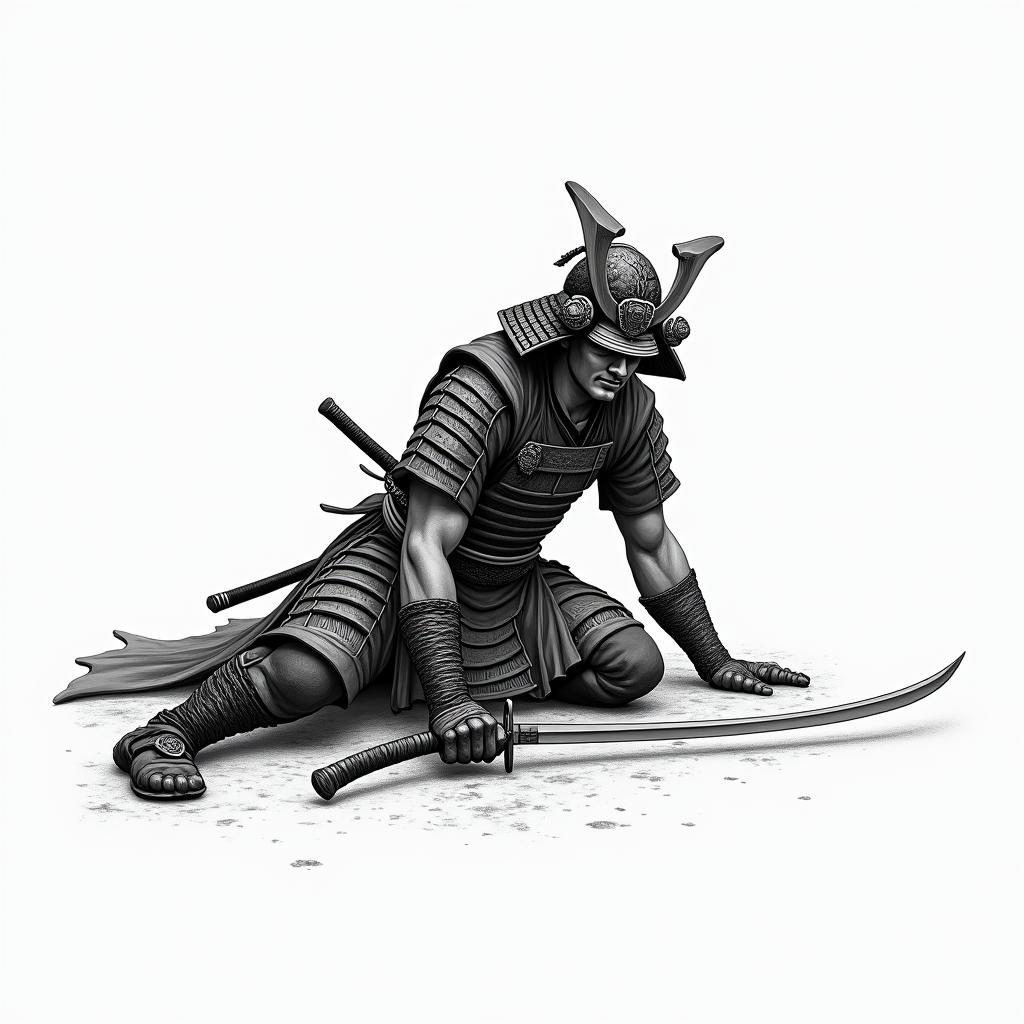
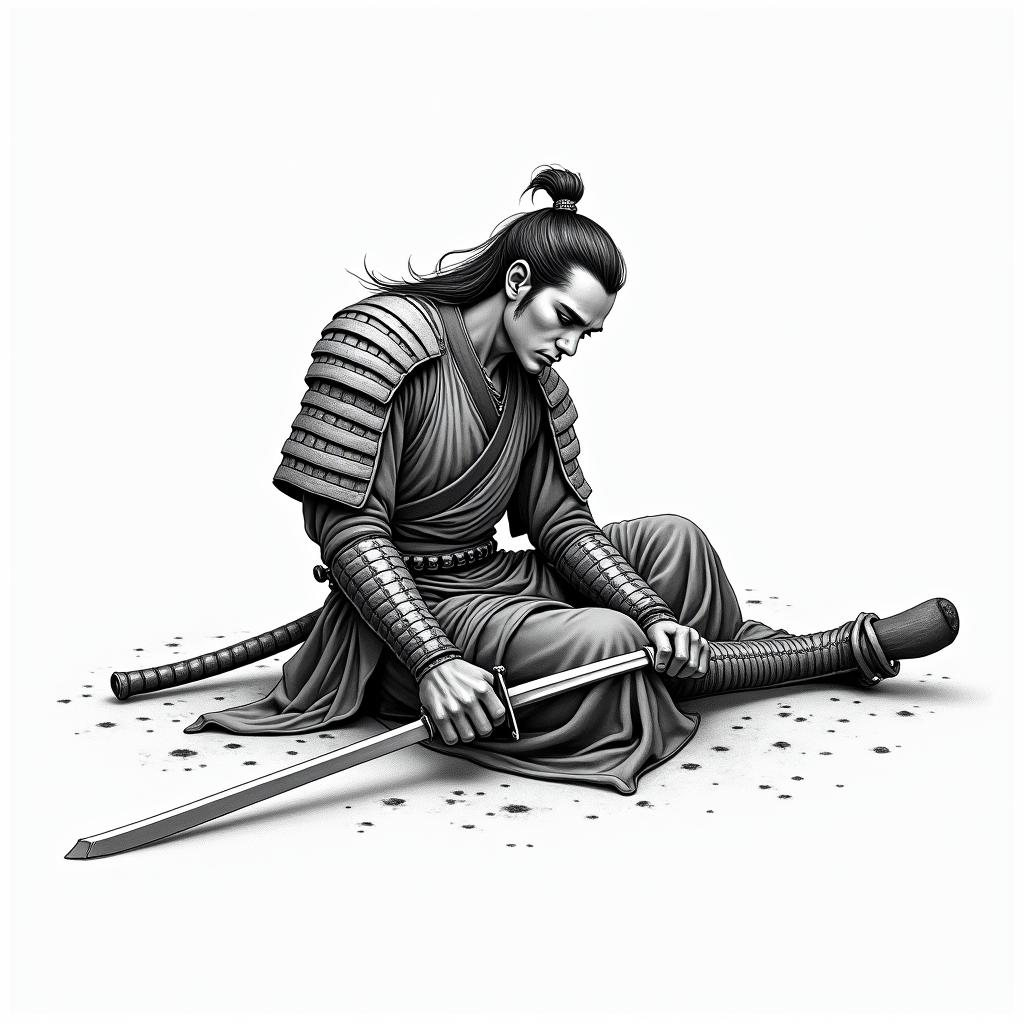
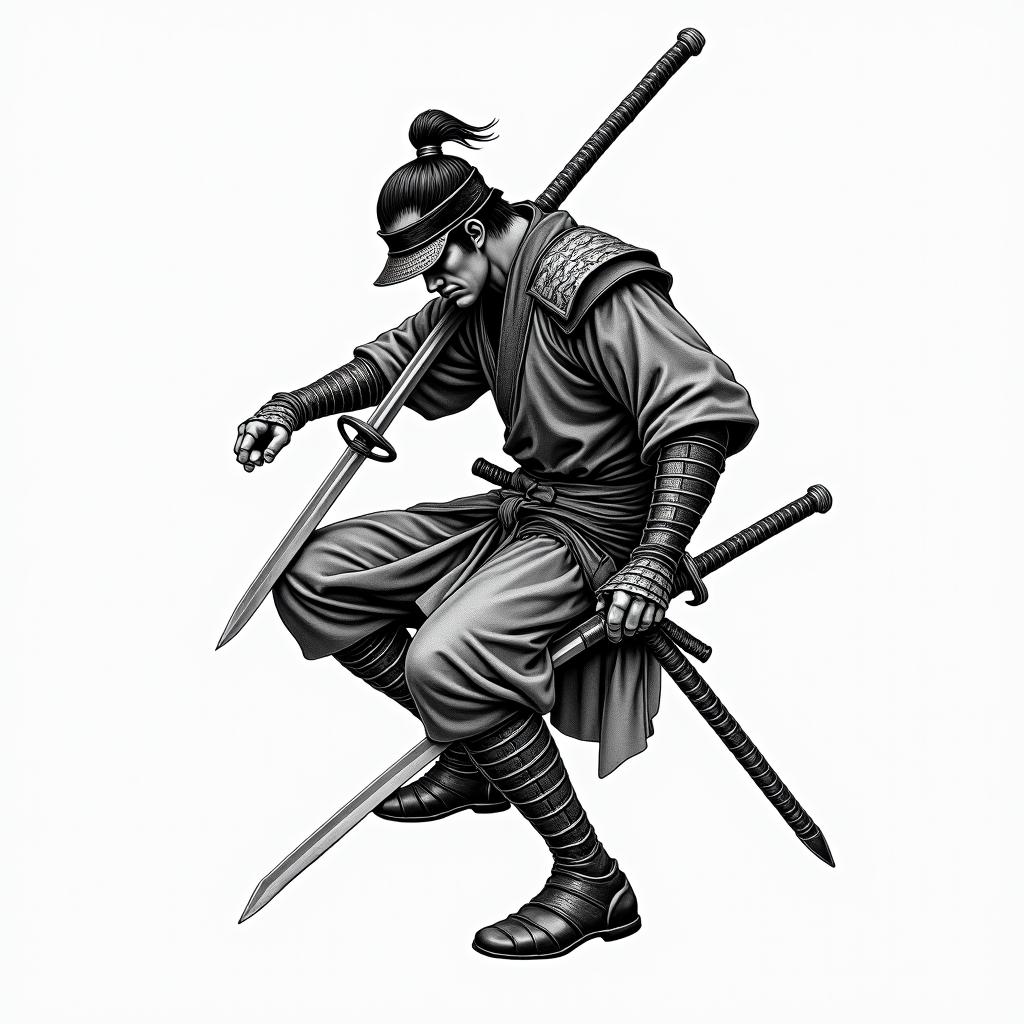
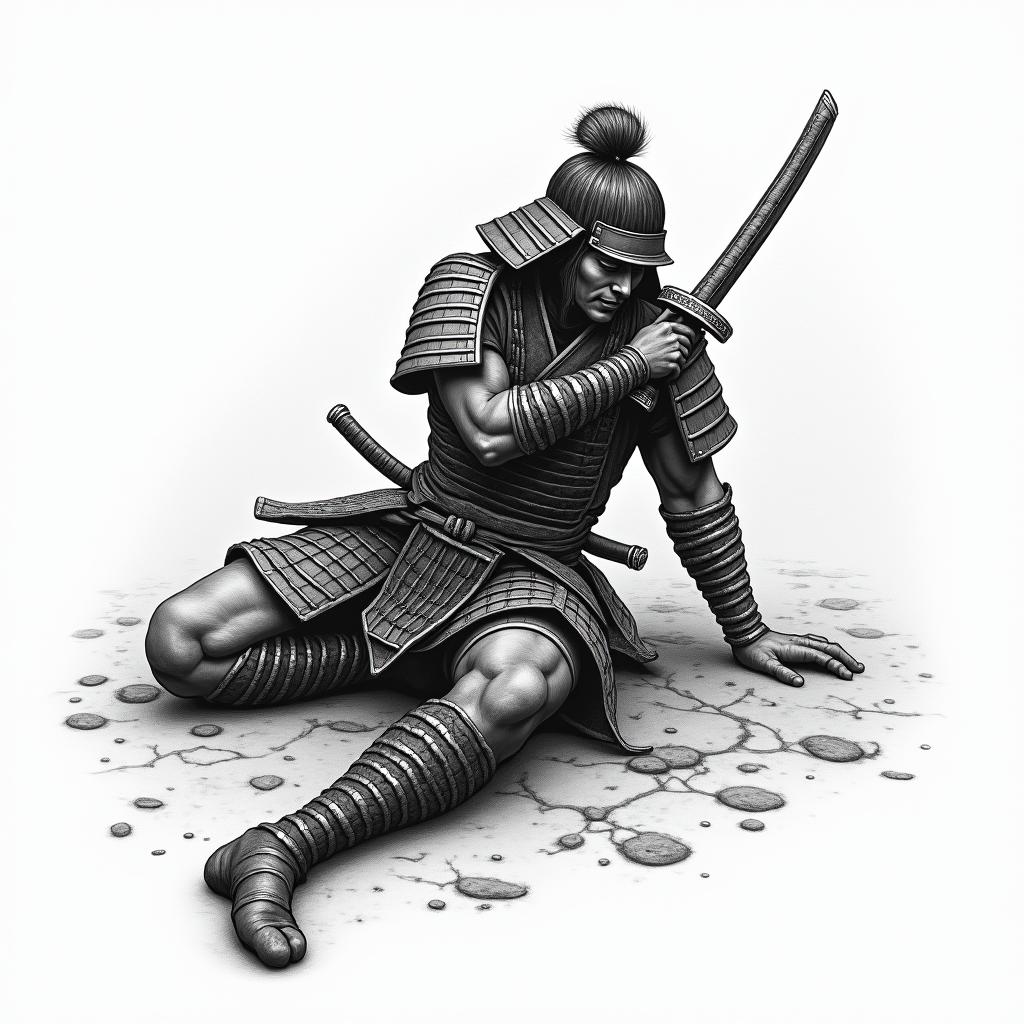
This design captures a pivotal moment of transformation where a warrior chooses peace over conflict. The samurai rests his blade, symbolizing the renunciation of violence and a return to civilian life. Rendered in classic Irezumi aesthetics, the piece utilizes bold linework and gradient shading to create depth and movement. Ideal for large canvas areas, the composition flows naturally along the body's contours. This narrative-driven artwork appeals to those seeking symbolism regarding personal growth, conflict resolution, or honoring ancestral heritage through traditional Japanese ink methodologies. The intricate detailing requires a skilled artist familiar with tebori-inspired machine techniques to ensure the shading transitions smoothly. Whether placed on the back or thigh, the imagery commands respect and tells a story of maturity. Such imagery resonates deeply with individuals undergoing significant life changes or career shifts. The bold outlines ensure longevity, preventing blur over decades. Color palettes typically feature deep blacks and muted reds to emphasize solemnity. It serves as a permanent reminder that true strength often lies in knowing when to stop fighting.
Noticeable discomfort, prepare for some sensitivity
Expect moderate discomfort primarily due to session length rather than extreme nerve density. The upper back offers manageable pain levels, while the thigh remains relatively low. Detailed shading phases may feel like a hot scratch persisting over time. Stay hydrated and eat beforehand to maintain pain tolerance. Breathing techniques help manage discomfort during long shading sessions. Numbing cream is unnecessary for these placements but can be discussed for sensitive individuals.
For optimal detail retention, place this design on flat surfaces like the upper back center or outer thigh. These areas provide sufficient canvas for the intricate armor and facial expressions without distortion during movement. Avoid highly curved areas like the ribs unless scaling up significantly. A minimum width of ten inches ensures the linework remains legible as the tattoo ages. Visibility is moderate; easily covered for professional settings if placed on the back or thigh. Ensure the orientation aligns with the body's vertical axis for a natural standing appearance.
japanese is a distinctive tattoo style characterized by Japanese: Traditional Japanese tattoos (Irezumi) featuring iconic motifs like koi fish, dragons, cherry blossoms, and waves. These rich, narrative designs follow centuries-old rules of composition, symbolism, and technique. Traditional: American Traditional tattoos feature bold black outlines, a limited color palette (red, green, yellow, blue, black), and iconic imagery like anchors, roses, eagles, skulls, and pin-up girls. This foundational style shaped modern tattooing and remains one of the most popular and recognizable approaches. Illustrative: Illustrative tattoos capture the aesthetic of hand-drawn illustrations, book artwork, and graphic novels. These designs emphasize artistic linework, cross-hatching, and stylized imagery that appears to have been drawn directly onto the skin.. This style has gained popularity for its versatility and visual appeal.
The duration depends on the size, complexity, and detail level. A design of this style typically requires 2-4 hours for a medium-sized piece, but consult with your artist for an accurate estimate.
Tattoo pricing varies by artist, location, and design complexity. Prices typically range from $150-$500+ for a design of this style. Always consult with your chosen artist for an accurate quote.