
1/4 • Click to zoom
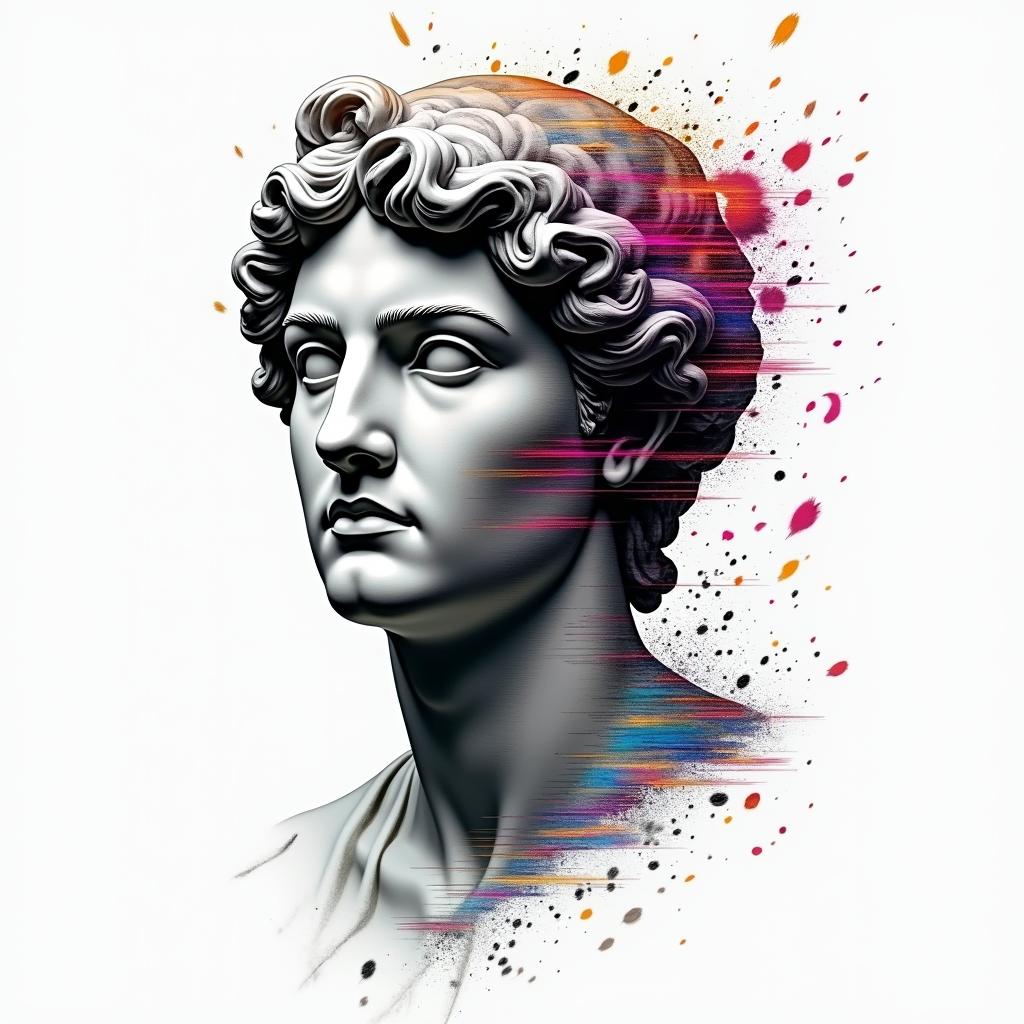
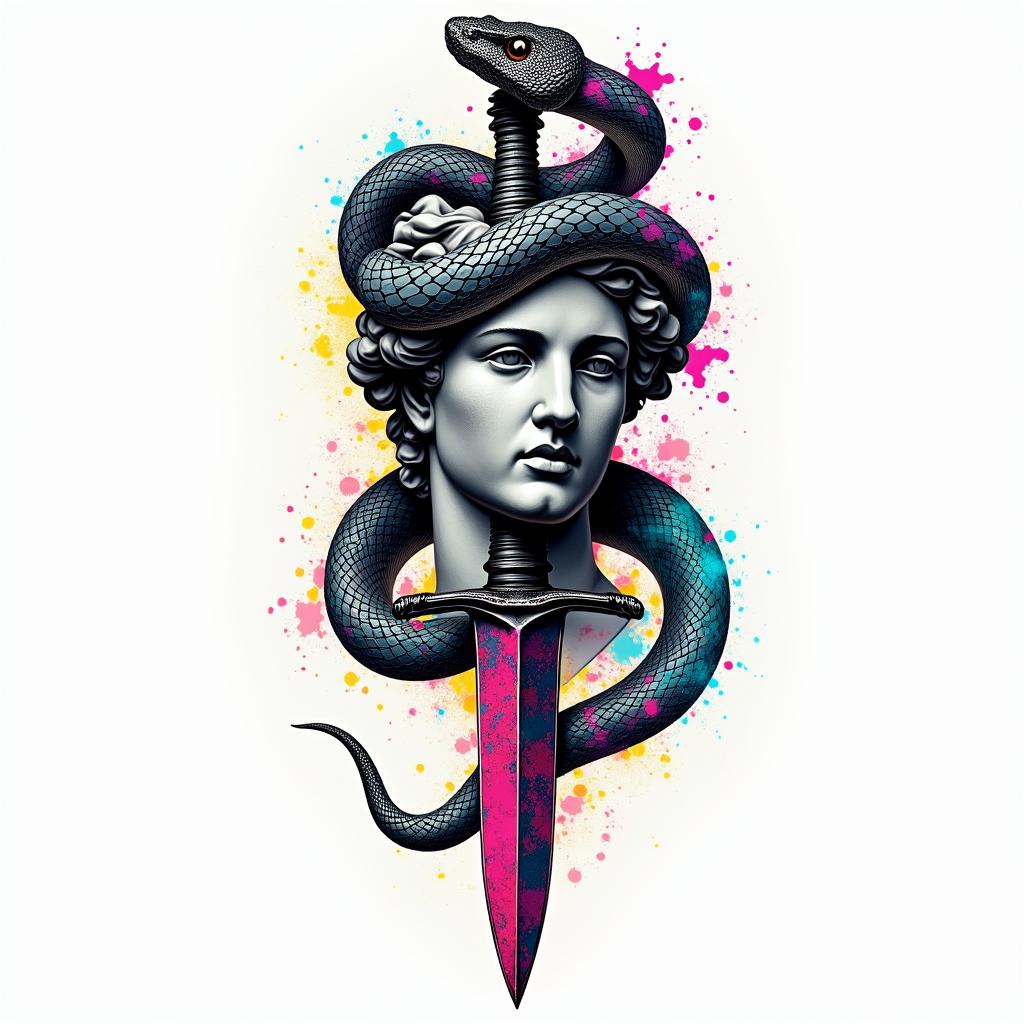
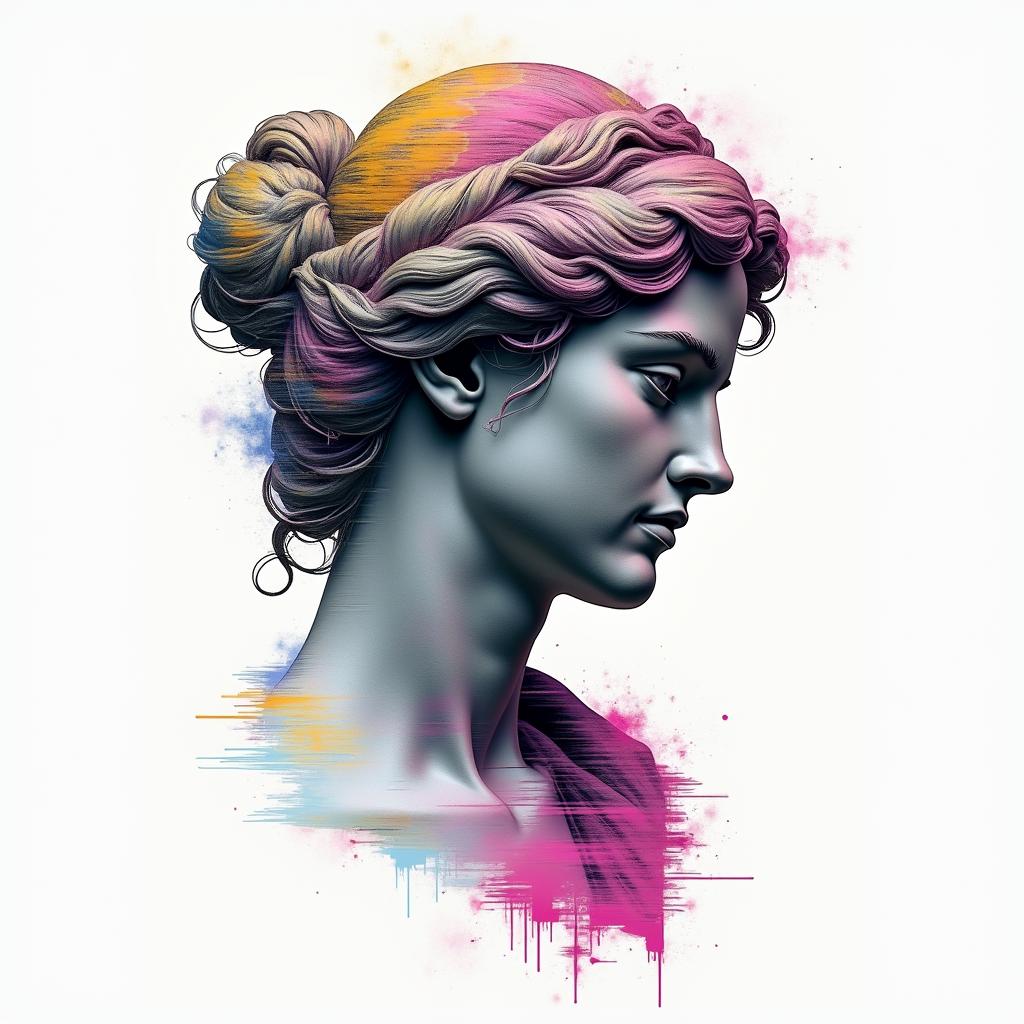
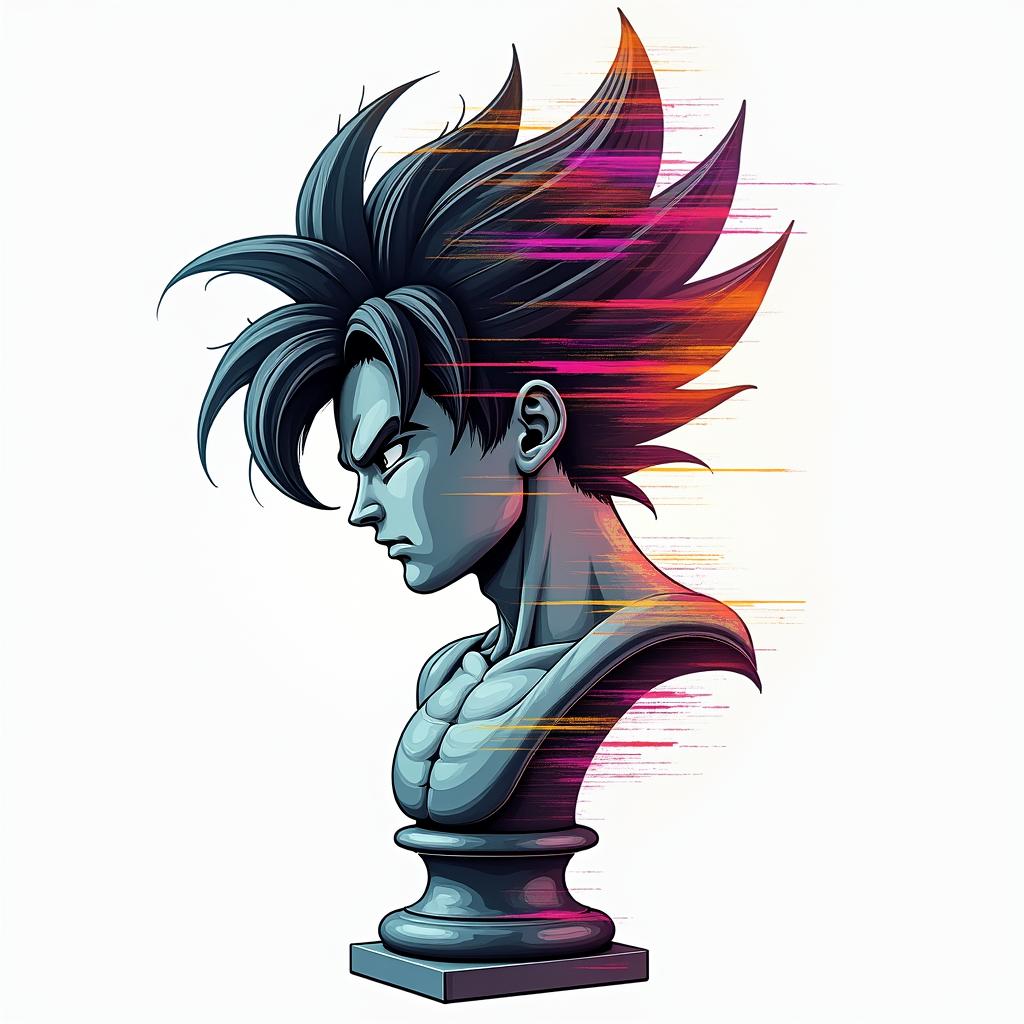
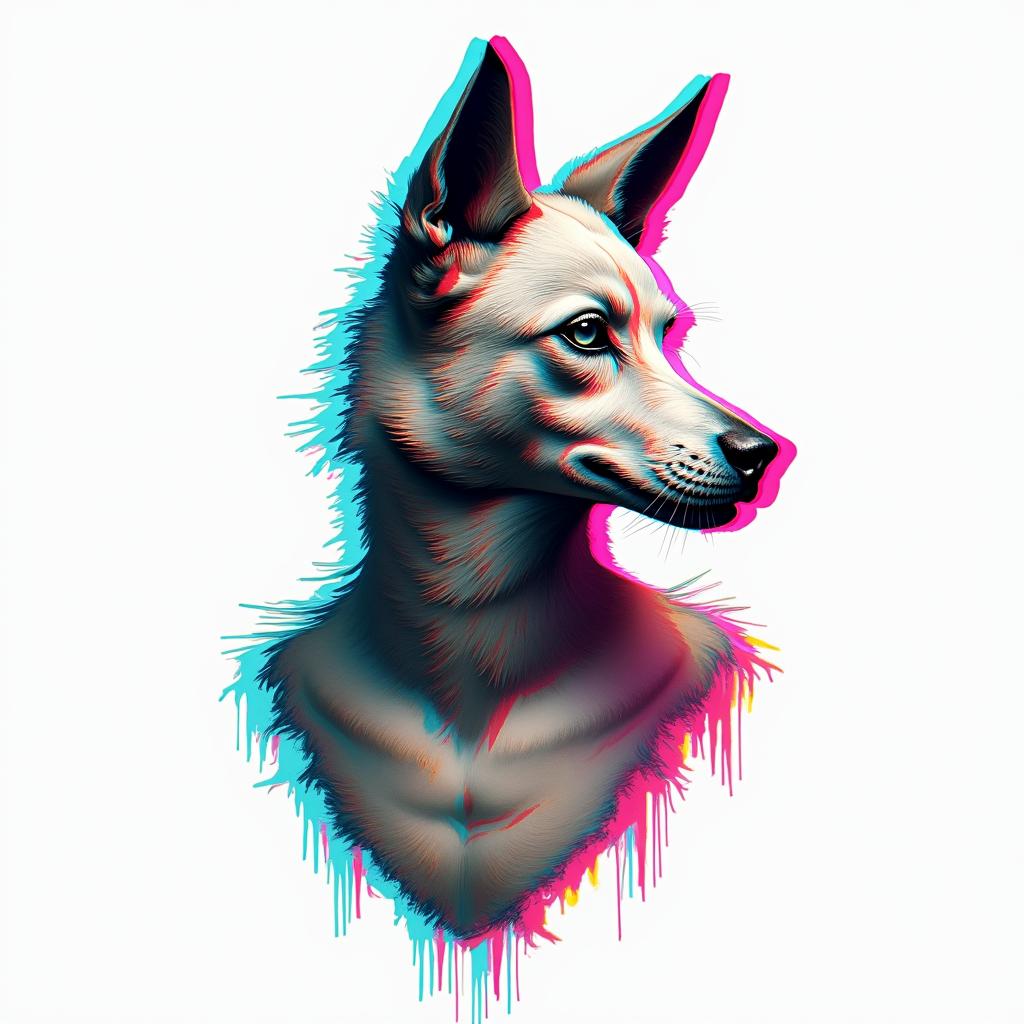
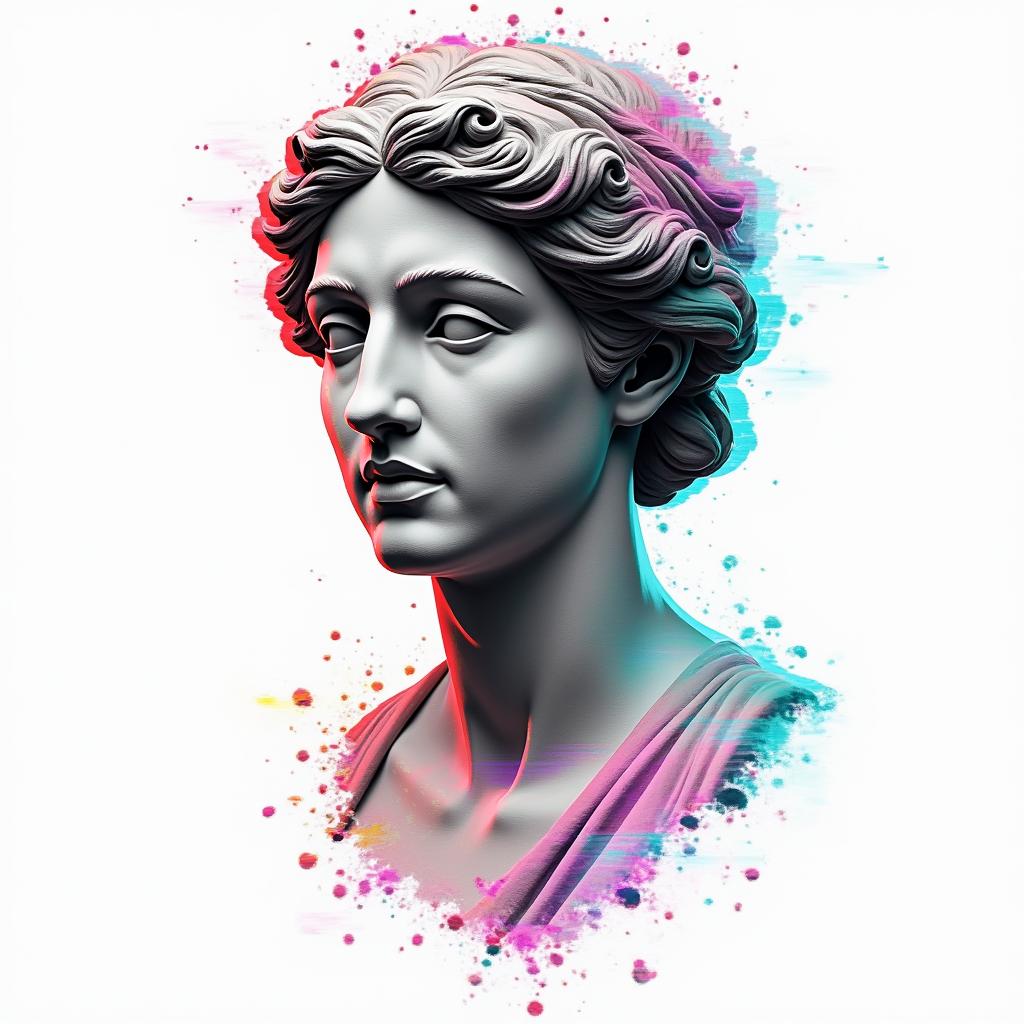
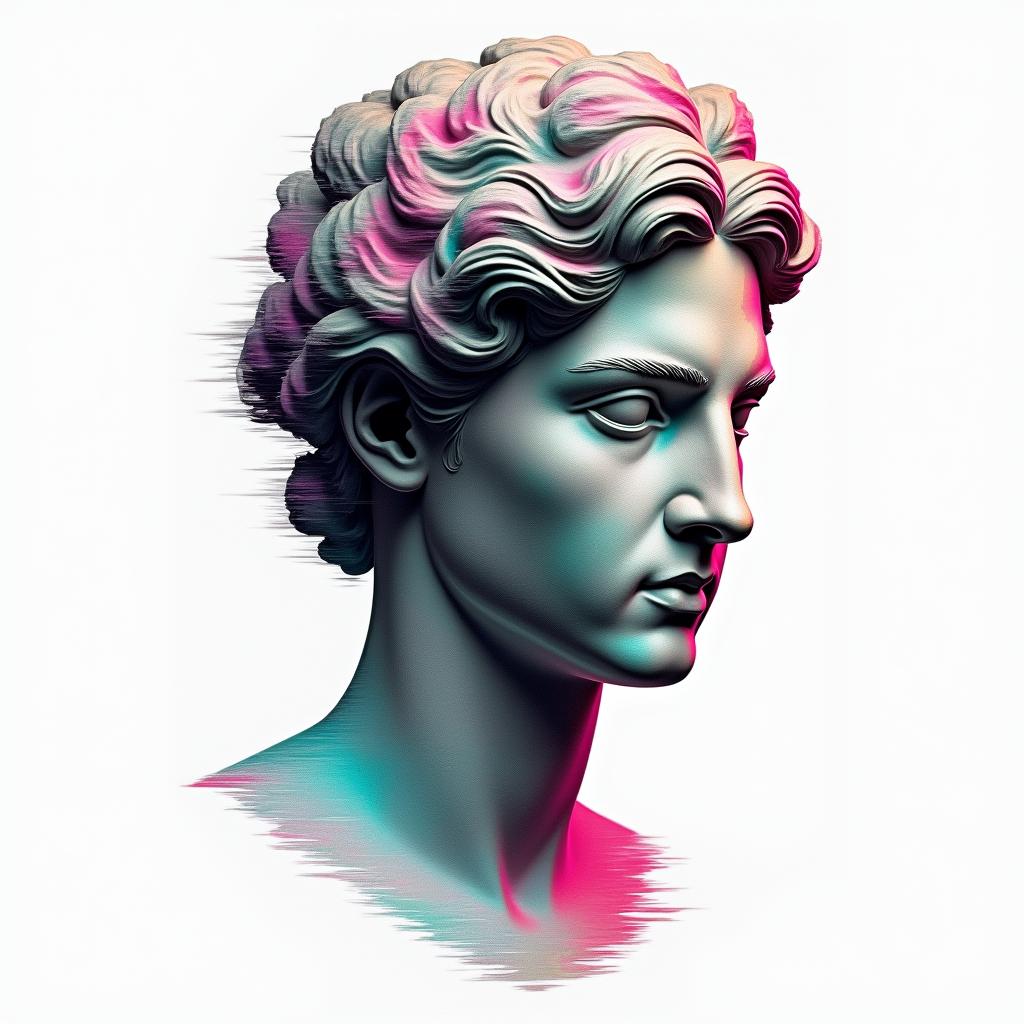
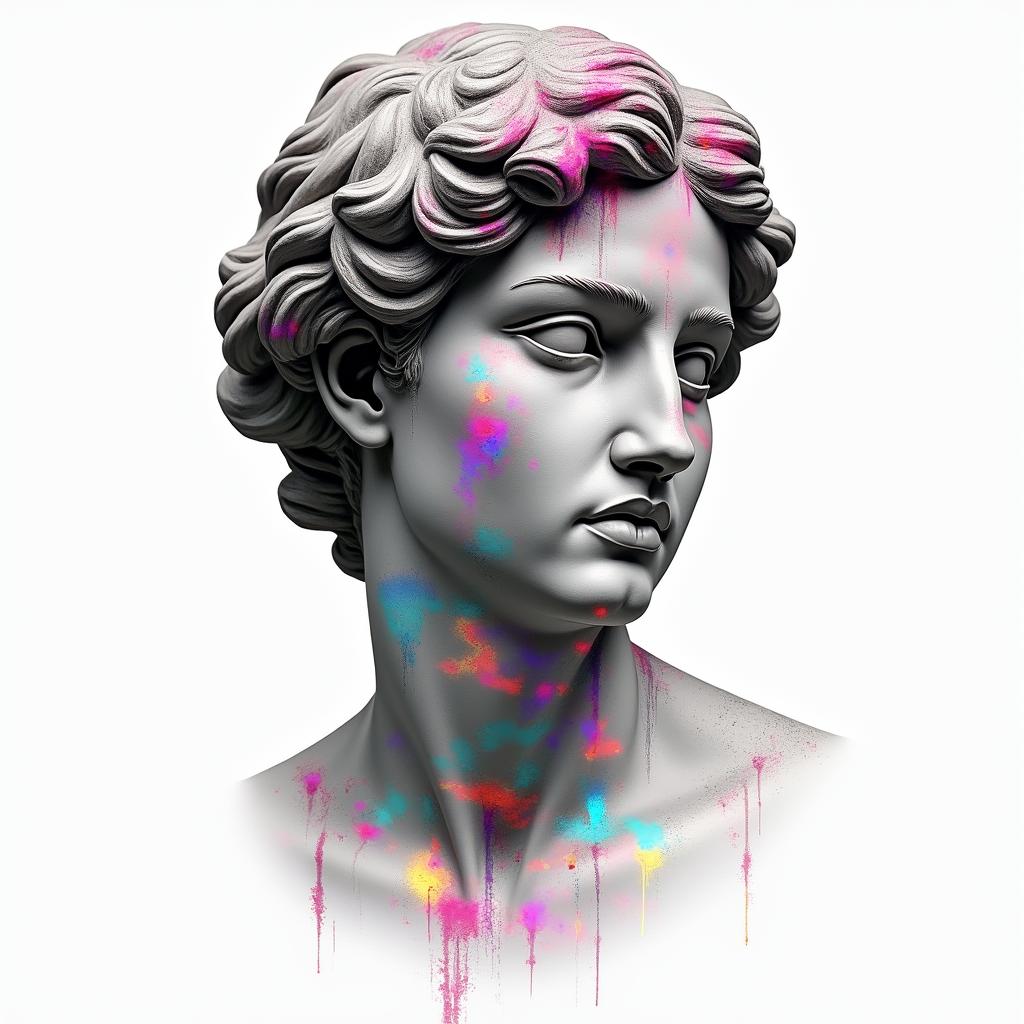
This design reinterprets classical sculpture through digital disruption, where fragmented geometry fractures a Greco-Roman bust into shifting planes of cyan, magenta, and yellow. The overlapping CMYK channels create a layered distortion effect, mimicking corrupted data streams while preserving the statue's serene features. Sharp linework defines the glitch fractures, with translucent color fields bleeding into one another to emphasize digital decay. The composition balances historical reverence with contemporary digital anxiety, speaking to identity fragmentation in the information age. Ideal placements include the shoulder or upper back, where the horizontal flow aligns with natural body contours. The forearm accommodates the linear elements for a subtler statement, while the back allows full color saturation. This piece demands precise needle control for the intricate linework and careful color blending to maintain the CMYK separation.
Noticeable discomfort, prepare for some sensitivity
Expect moderate discomfort concentrated in detailed linework sections where the needle navigates tight glitch fractures. Color saturation with cyan, magenta, and yellow layers adds brief sharp sensations during pigment packing. Breathe deeply during complex sections and request micro-breaks every 15 minutes. Topical numbing aids color work but won't eliminate sensation from the precise linework. Pain remains manageable on shoulder placements, peaking during yellow layer application due to high saturation requirements.
The shoulder provides optimal canvas for this design's horizontal flow, with the bust aligning along the deltoid curve for natural movement. Upper back placement allows full CMYK color saturation across the scapular plane, while the outer bicep suits medium-sized versions where the glitch fractures follow arm contours. Avoid bony areas like ribs or spine that distort the digital effect. Minimum size: 4x4 inches to preserve detail integrity. Shoulder placements yield low pain (25-35), while upper back registers moderate discomfort (38-42) due to muscle density. Color packing increases sensation during magenta and yellow saturation phases.
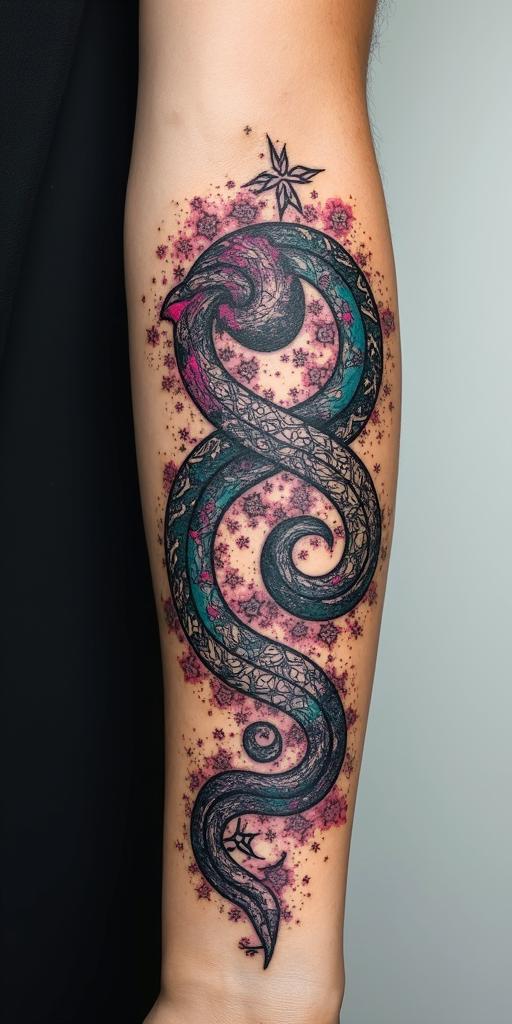
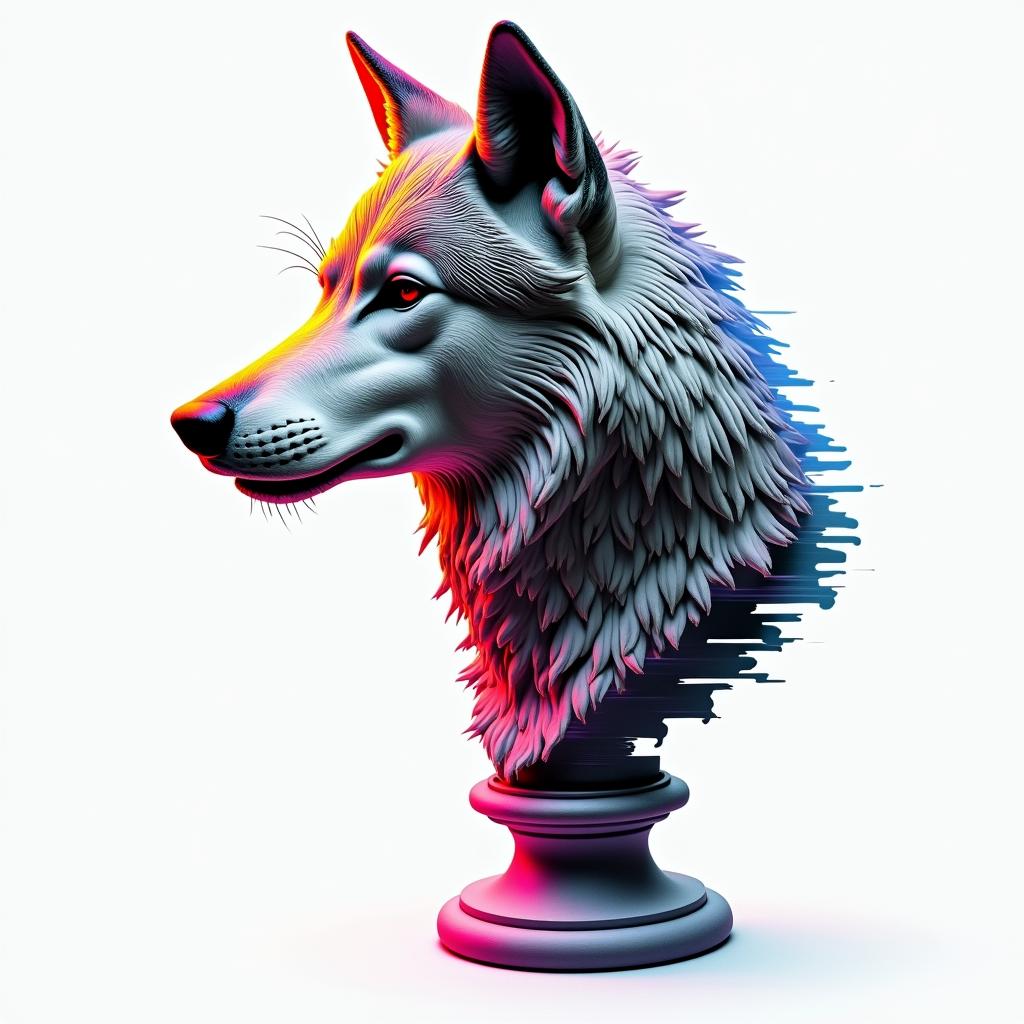
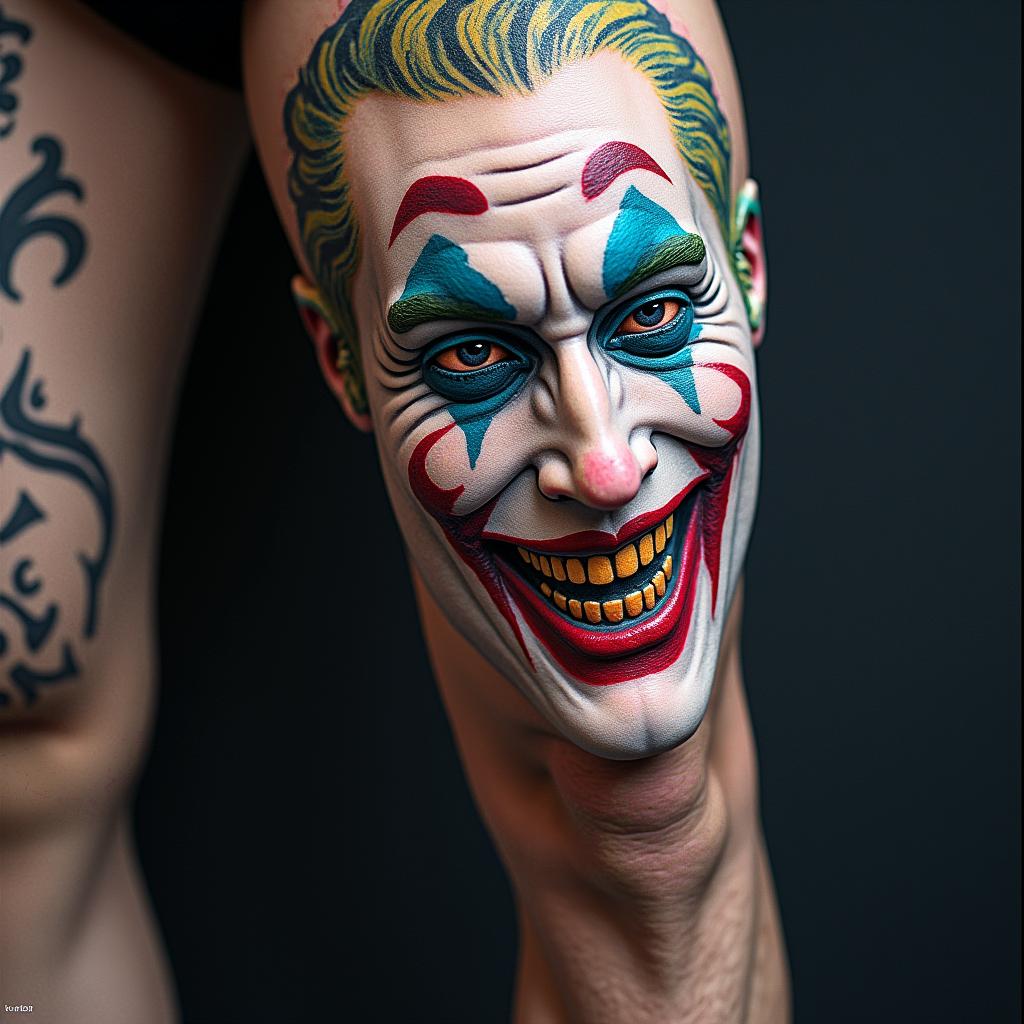
glitch is a distinctive tattoo style characterized by Glitch: Modern digital-inspired tattoos featuring distorted imagery, pixelation, and visual artifacts that mimic computer glitches. This contemporary style creates a unique intersection of technology and body art.. This style has gained popularity for its visual appeal.
The duration depends on the size, complexity, and detail level. A design of this style typically requires 2-4 hours for a medium-sized piece, but consult with your artist for an accurate estimate.
Tattoo pricing varies by artist, location, and design complexity. Prices typically range from $150-$500+ for a design of this style. Always consult with your chosen artist for an accurate quote.