1/2 • Click to zoom
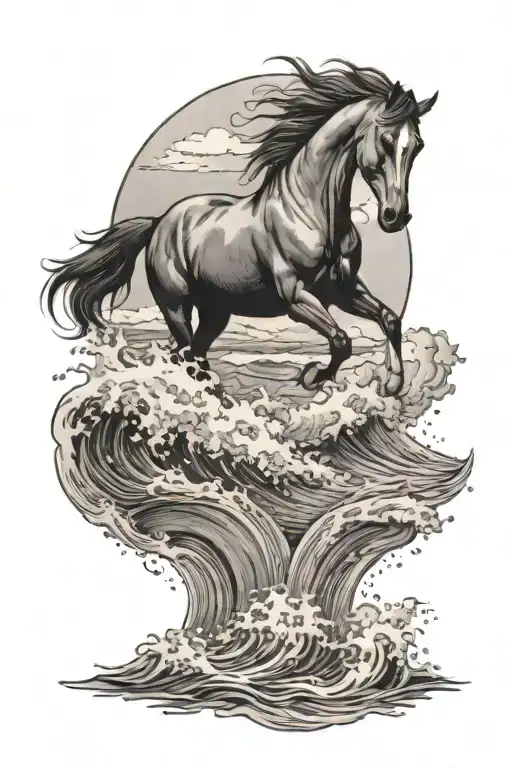
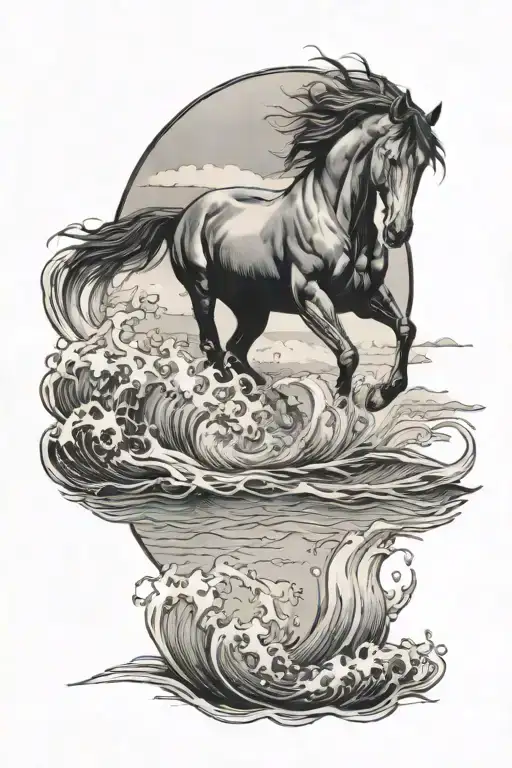
Capture the tranquility of nature with this black-grey composition featuring a horse navigating ocean waves. This design merges animal vitality with the fluid motion of water, creating a narrative of freedom and resilience. The shading techniques emphasize the muscle definition of the horse against the textured foam of the sea, utilizing smooth gradients to achieve depth without color. Ideal for vertical placements, the scene flows naturally along the body's contours. The interplay of light and shadow mimics the movement of tide, making it a dynamic piece that ages well. Symbolically, the swimming horse represents overcoming obstacles with grace and strength. Whether placed on the forearm or calf, the detailed linework ensures clarity over time. This piece appeals to those seeking meaningful animal imagery grounded in realistic rendering. The monochromatic palette allows for versatility in sizing while maintaining impact. Consider this for a statement piece that balances serenity with power. Artists should focus on contrast levels to prevent the water details from blurring into the background over years. The composition suits those who appreciate marine environments and equestrian themes equally.
Noticeable discomfort, prepare for some sensitivity
Expect moderate discomfort on fleshy areas like the outer thigh and calf. Forearm sessions involve intermittent vibration near the bone. Shading the water requires prolonged needle contact, increasing sensitivity. Maintain steady breathing during gradient work to manage endurance. Topical numbing agents work well on these zones if approved by your artist. Breaks every forty-five minutes help reset pain tolerance during detailed ocean rendering.
Vertical compositions thrive on the outer forearm and calf, where the canvas accommodates the horse's height and wave movement. The outer thigh offers a broader surface for expanded background details. Rib placements create a dramatic flow but require careful contouring around the curvature. For professional settings, forearm and calf options remain easily concealable with standard clothing. Minimum width should exceed four inches to preserve water texture integrity. Larger dimensions on the thigh allow for finer gradient work in the ocean shading. Avoid areas prone to excessive friction to maintain line sharpness over time.
realism is a distinctive tattoo style characterized by Realism: Photorealistic tattoos that mimic photographs with exceptional detail, shading, and dimension. These technically demanding designs create the illusion of 3D imagery on skin, showcasing incredible artistic skill. Illustrative: Illustrative tattoos capture the aesthetic of hand-drawn illustrations, book artwork, and graphic novels. These designs emphasize artistic linework, cross-hatching, and stylized imagery that appears to have been drawn directly onto the skin. Animal: Animal tattoos depict wildlife, pets, and creatures from the natural world in styles ranging from photorealistic to stylized. These designs celebrate the beauty, power, and symbolism of animals, often carrying deep personal meaning for the wearer.. This style has gained popularity for its versatility and visual appeal.
Yes, this design is well-suited for tall placement. This realism design is ideal for tall placement. Consider consulting with a professional tattoo artist about the best placement for this design.
The duration depends on the size, complexity, and detail level. A design of this style typically requires 2-4 hours for a medium-sized piece, but consult with your artist for an accurate estimate.
Tattoo pricing varies by artist, location, and design complexity. Prices typically range from $150-$500+ for a design of this style. Always consult with your chosen artist for an accurate quote.
Proper aftercare is crucial for tall tattoos. Keep the area clean, moisturized, and protected from sun exposure. Follow your artist's specific aftercare instructions for best results.
tall
tall
tall
tall
tall
tall
tall