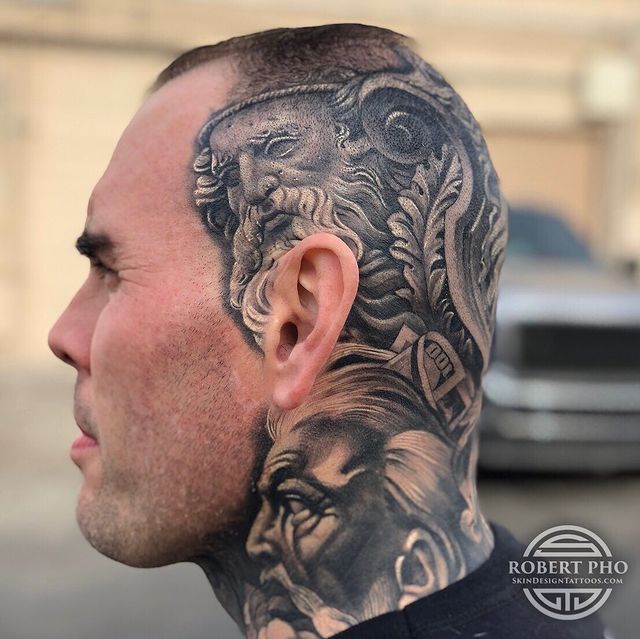
Robert Pho
Robert Pho is a highly skilled tattoo artist specializing in black & gray realism with over 30 years of experience under his belt. Based in Honolulu, United States, he exhibits immense professionalism in his craft, which has earned him an impressive following of roughly 120,000 on Instagram. His work not only spans multiple decades but also various locations including Las Vegas, New York, and Southern California.
Robert Pho is a black and gray tattoo artist based in Honolulu, Hawaii, recognized for his photorealistic portraiture and detail-heavy compositions. With over 120,000 followers on Instagram, his work speaks for itself. Pho's style traces back to the Los Angeles black-and-gray tradition, shaped by his personal history documented in the LA Times. That background gives his pieces a raw authenticity that sets him apart. He specializes in black and gray realism, from portraits to elaborate sleeves. If you want black and gray work in Honolulu, Robert Pho is one of the most followed and respected names doing it today.
History & Origins
Robert Pho's story does not start in a clean studio. It starts in Los Angeles, where the black and gray tradition was forged in a mix of Chicano culture, street life, and prison tattooing. The LA Times documented how Pho's time in that world shaped every line he puts on skin. He did not learn realism from a textbook. He learned it from a visual language that grew out of necessity, using makeshift tools and limited ink to create depth and emotion. That origin is not a footnote. It is the reason his shading hits different. When you look at a Robert Pho piece, you are seeing a technique refined under pressure, passed through a lineage of artists who turned constraint into craft. Honolulu is where he works now, but LA is where the style was born.
Defining Characteristics
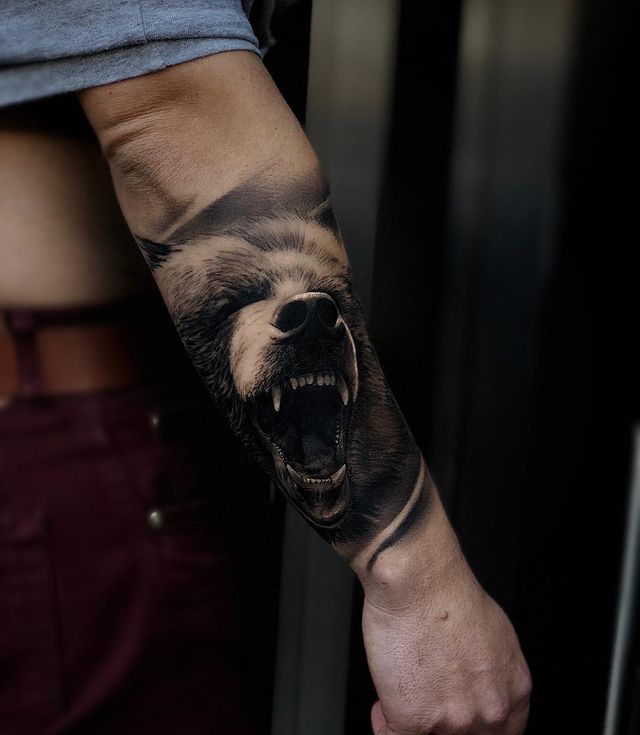
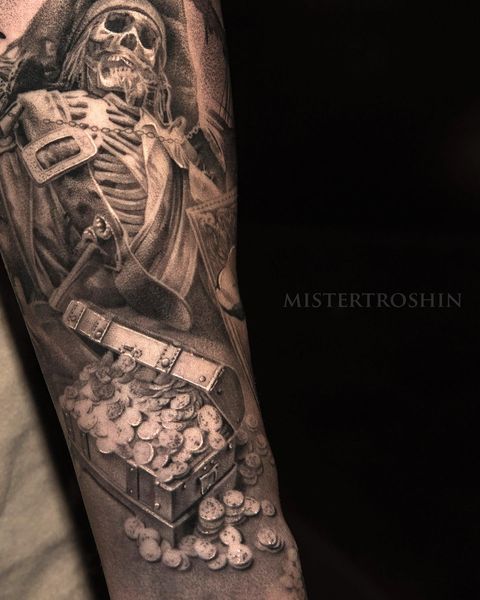
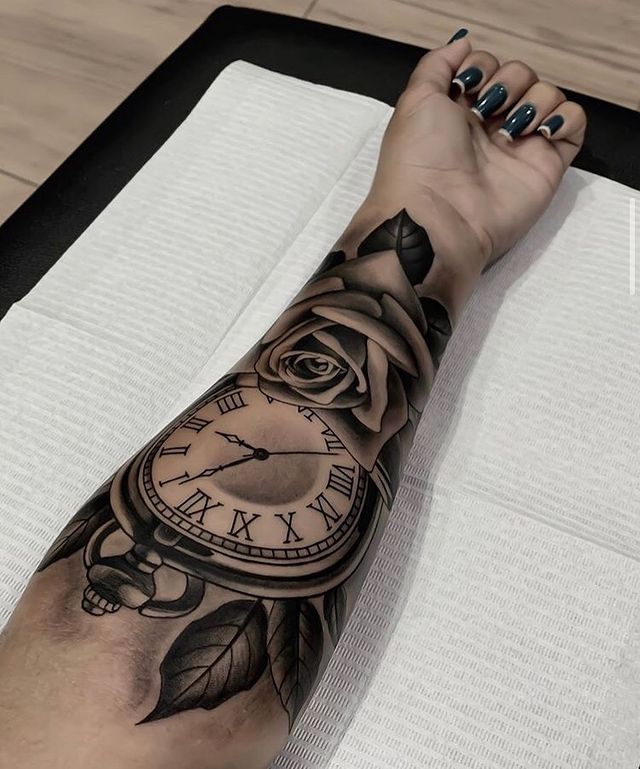
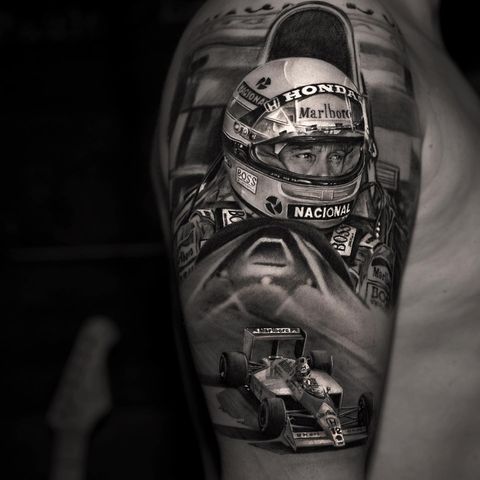
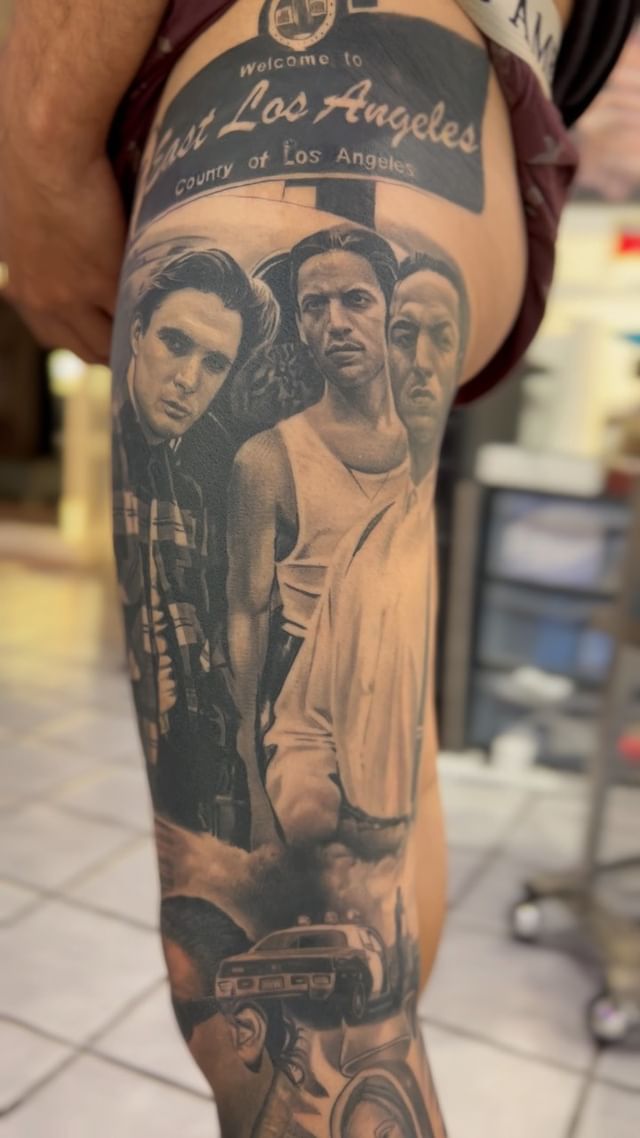
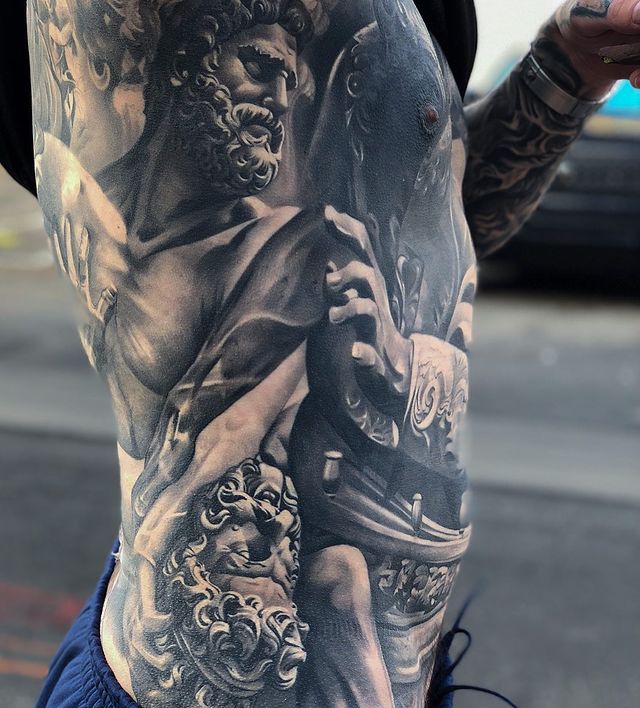
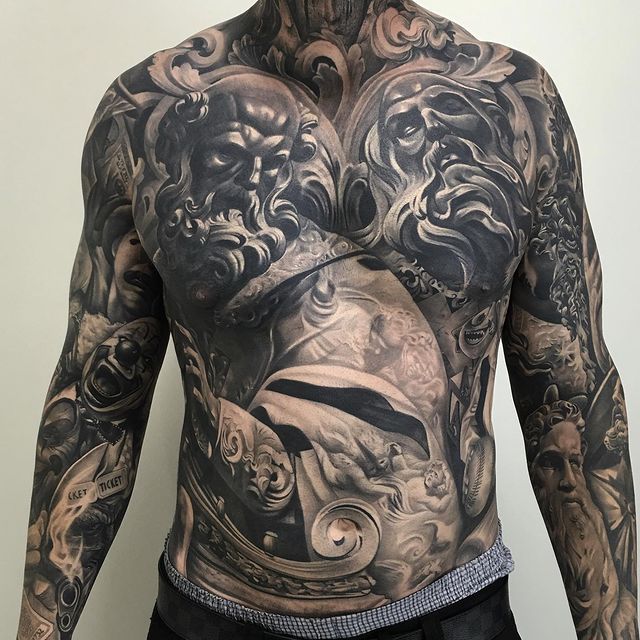
Black and gray realism is the core of Robert Pho's work. No color. No shortcuts. Just black ink diluted to every shade between pure black and bare skin. This technique demands precision. A portrait can fall apart if the highlight on a cheekbone is off by a millimeter. Pho's strength is in that control. His gradients move smoothly from dark shadows to soft midtones to near-transparent washes. The contrast is deliberate. Dark areas go dark enough to hold weight. Light areas stay clean. What makes his work stand out is the texture. Skin looks like skin. Fabric folds look tangible. Hair has individual strands, not just shaded shapes. At over 120,000 followers on Instagram, the audience is not there for flash. They are there because the realism holds up at any distance, from across a room or inches away.
Popular Motifs & Subjects
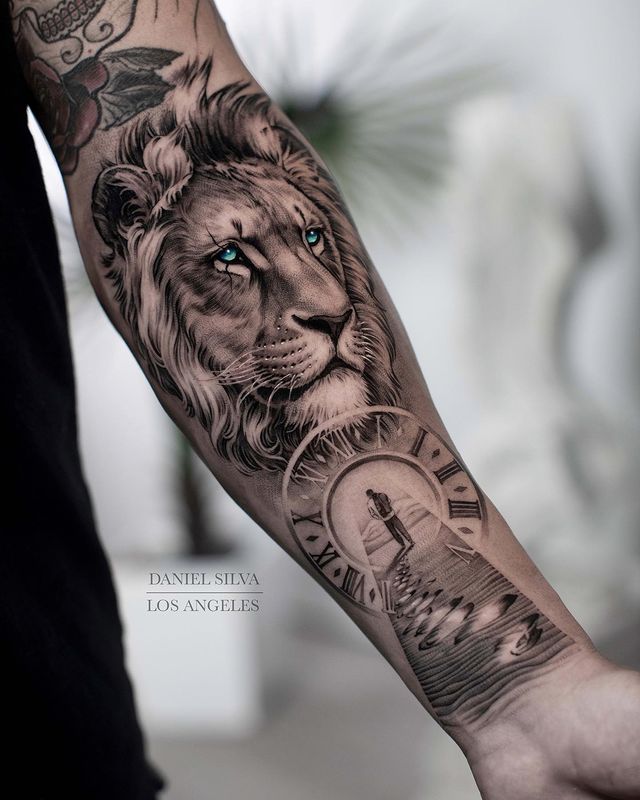
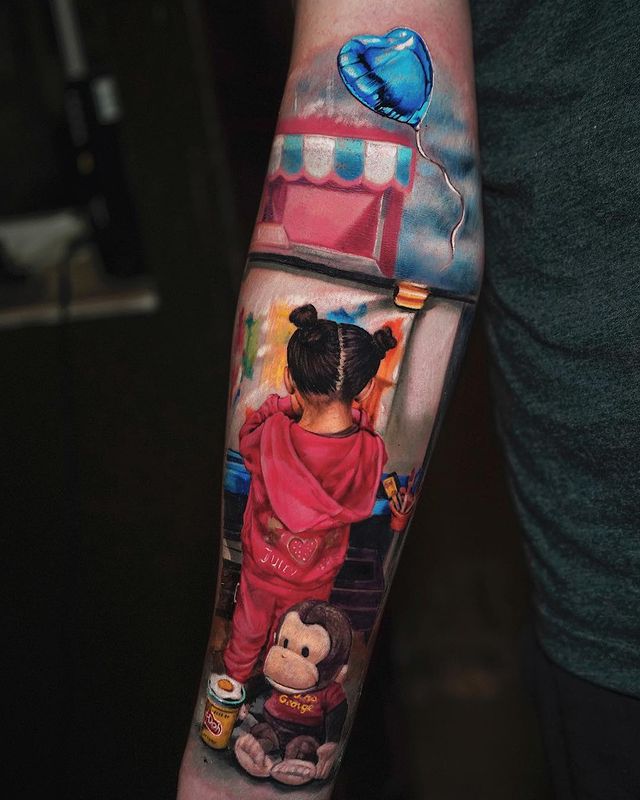
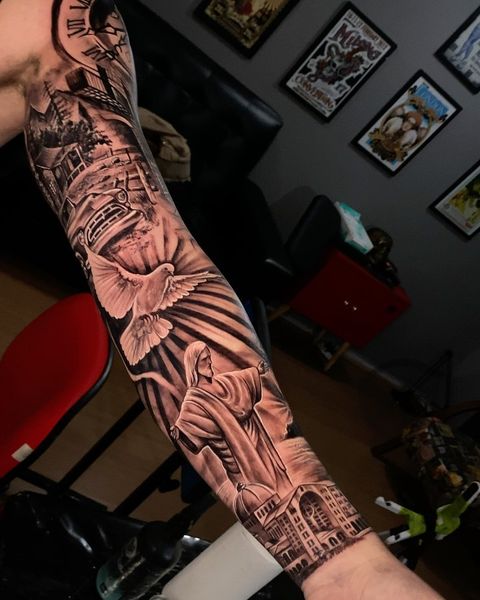
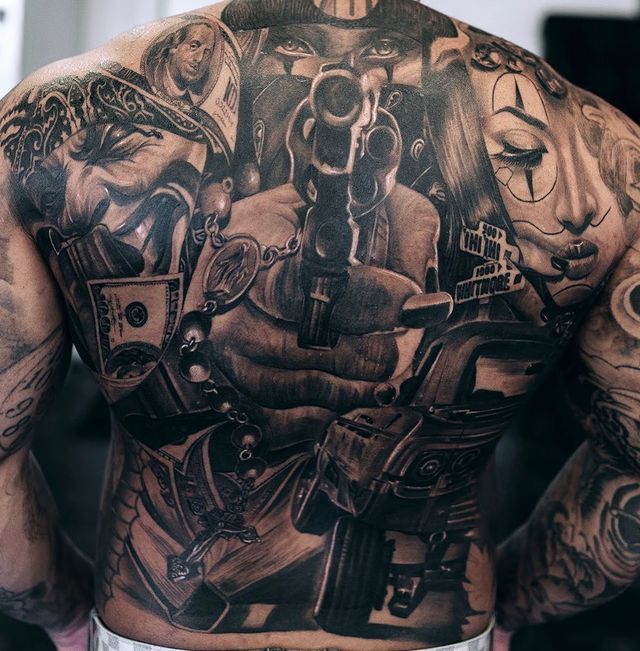
Portraits dominate Robert Pho's portfolio. Family members, cultural figures, and iconic faces all show up regularly. He handles eyes, expressions, and likeness with the accuracy that realism demands. Beyond portraits, his work includes religious iconography, particularly imagery tied to his cultural background. Saints, crosses, and devotional figures appear often, rendered with the weight and reverence the subjects carry. Animals also show up. Lions, eagles, and koi fish are common in black and gray traditions, and Pho gives them the same level of detail as his human subjects. Fur, feathers, and scales get individual attention. Sleeves and large-scale pieces let him build narratives across the body, combining multiple elements into a single flowing composition. Each piece tells a story, not just a collection of images placed side by side.
Placement & Sizing
Black and gray realism needs space. That is not a suggestion. It is a requirement. The shading technique relies on gradual transitions, and cramming that into a tiny area means losing the detail that makes the style work. Robert Pho's best pieces are sleeves, back pieces, and large chest panels. These placements give the work room to breathe. Arms are ideal for his style because the long canvas lets him build a story from shoulder to wrist. The inner arm, often a tough spot for healing, is one he handles well because the skin holds gray washes cleanly. Smaller pieces are possible, but expect simpler compositions. A single portrait on a forearm can still hit hard if the reference is strong and the sizing is right. Talk to him directly about what fits your placement goals. He will tell you honestly if an idea needs more room.
Choosing an Artist for Black & Gray Work
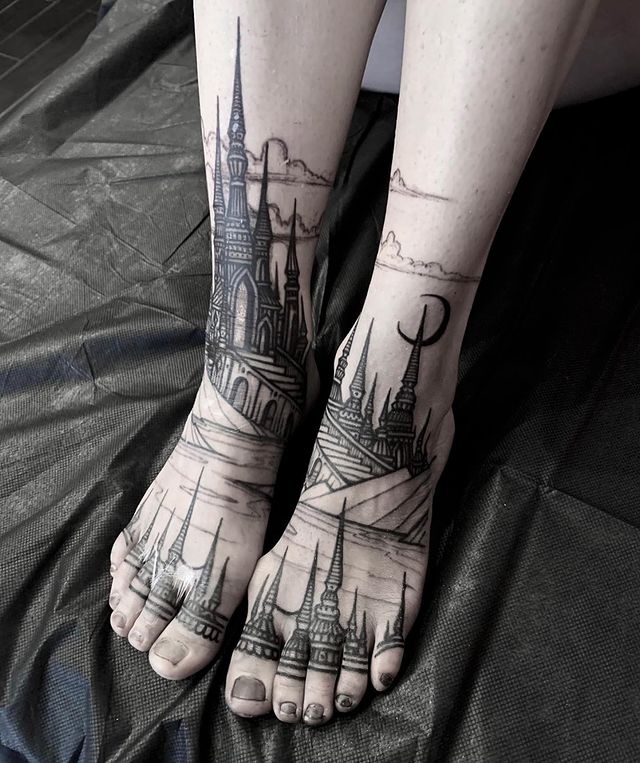
Not every artist who works in black and gray works in realism. The distinction matters. Some black and gray artists focus on traditional Chicano script, ornamental patterns, or illustrative styles. Robert Pho is a realism specialist. If you want a portrait that actually looks like the person, he is the right category of artist. When choosing someone for black and gray realism, look at healed photos, not just fresh ones. Fresh tattoos always look sharp. Healed work shows whether the artist understands how ink settles over time. Check that their contrast holds up months later. Look at how they handle the darkest darks and the lightest lights. If everything blends into a muddy middle gray after healing, the artist lacks the control you need. Browse tattoo ideas on Inksy to compare styles, then use the artist directory to find black and gray specialists near you.
Explore more
Frequently Asked Questions
What style of tattoos does Robert Pho specialize in?
Robert Pho specializes in black and gray tattoos. His work leans heavily into realism, including portraits and detailed sleeve compositions. The black and gray tradition he works in has deep roots in the Los Angeles tattoo scene, which influenced his approach to shading and contrast.
How do I book a tattoo appointment with Robert Pho?
Contact Robert Pho directly through his Instagram profile @robert_pho to inquire about booking. He does not list a specific studio or shop affiliation publicly, so reaching out via social media is the most reliable way to check availability, discuss your design, and schedule a session.
How much does Robert Pho charge for a tattoo?
Robert Pho does not publicly list his rates or hourly pricing. Tattoo costs depend on size, detail, and session length. Contact the artist directly via Instagram to discuss pricing for your specific project.
Where is Robert Pho located?
Robert Pho is based in Honolulu, Hawaii. His current studio or shop affiliation is not publicly listed, so contact him directly to confirm where sessions take place.
What is Robert Pho's background in tattooing?
Robert Pho's tattoo career is rooted in the Los Angeles black and gray tradition. As covered in the LA Times, his experience with LA gang and prison culture directly shaped his artistic style. That history informs the authenticity and rawness of his black and gray realism work today.