El Jarty McHartman The 3rd
Justin Hartman, a renowned tattoo artist based in San Diego, United States, specializes in intricate neotraditional and black & gray tattoo styles. With his impeccable skills drawing over 320,000 followers on Instagram, he uses high-quality equipment from Cheyenne Tattoo Equipment together with vibrant Fusion Ink to create stunning pieces. His artwork speaks of deep-rooted professionalism and meticulous attention to detail, setting high standards in the tattoo industry.
Justin Hartman is a tattoo artist based in San Diego, California, specializing in neotraditional and black & gray tattooing. With over 327,000 followers on Instagram, Hartman has built a visible presence in the tattoo community for bold, illustrative designs that blend traditional tattoo structure with modern shading and color techniques. His neotraditional work leans on saturated color and clean line work, while his black & gray pieces show a strong grasp of value and texture. Hartman works independently in the San Diego area. For booking, pricing, and availability, contact the artist directly through his website or Instagram.
Neotraditional Tattooing: History & Origins
Neotraditional tattooing grew out of American traditional (also called old school) tattooing in the late 1980s and 1990s. Artists kept the bold outlines and iconic imagery of traditional work but pushed further with expanded color palettes, more detailed shading, and a wider range of subject matter. Where traditional tattooing stuck to a limited set of motifs, roses, eagles, daggers, neotraditional artists brought in wildlife portraits, botanical studies, and figurative work with a painterly edge. Justin Hartman works within this lineage from his base in San Diego. His approach to neotraditional tattooing draws on that classic structural foundation, clean line work, saturated fills, while adding depth through gradient shading and color blending that older traditional work never attempted. The style sits between the graphic punch of old school and the realism of contemporary illustration, which is exactly what makes it so versatile for collectors.
Defining Characteristics of Justin Hartman's Work
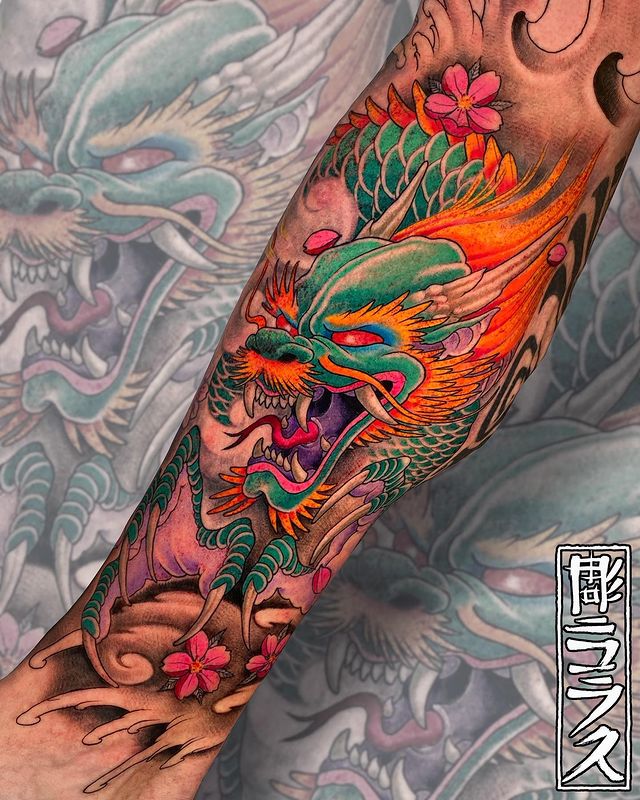
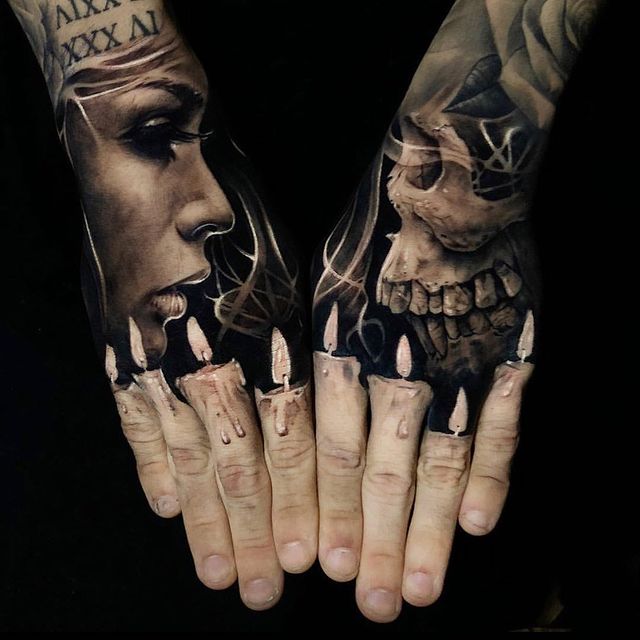
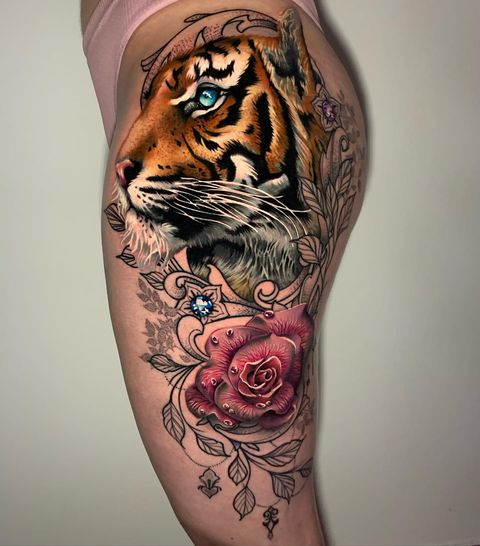
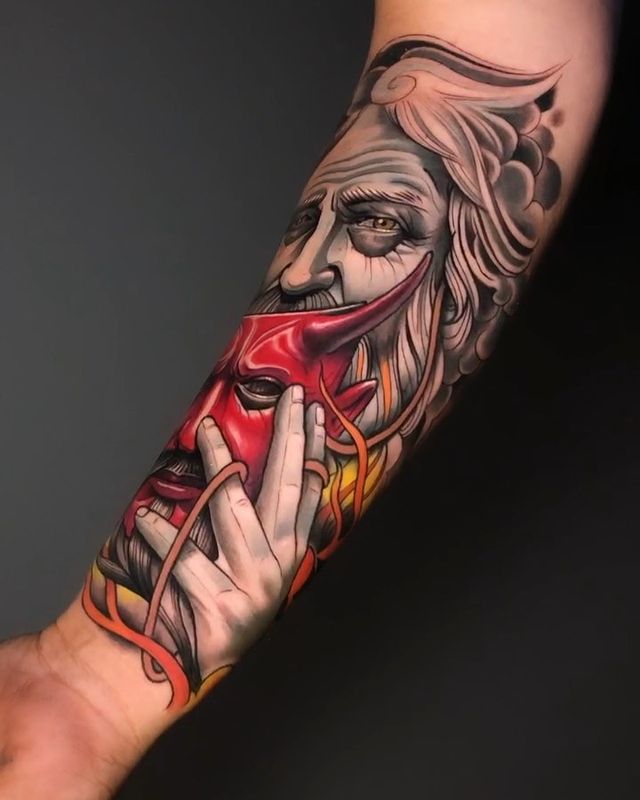
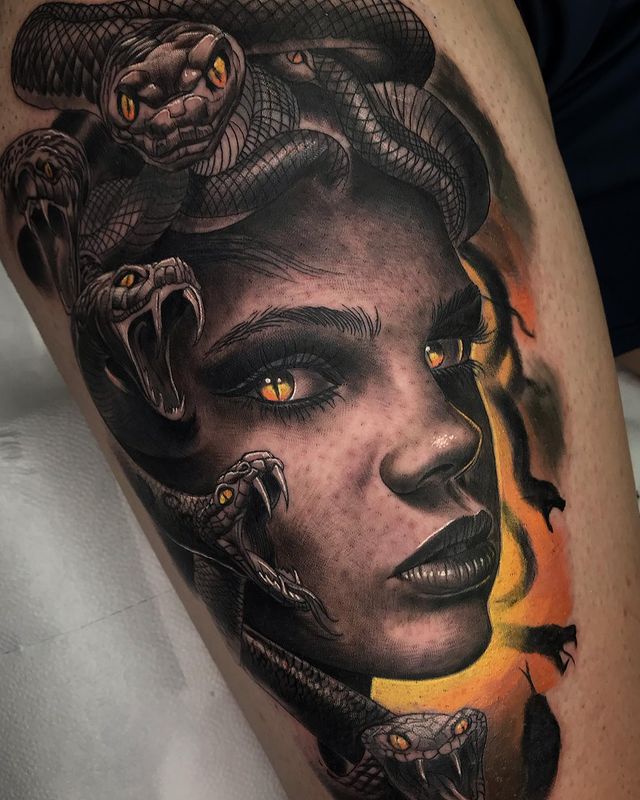
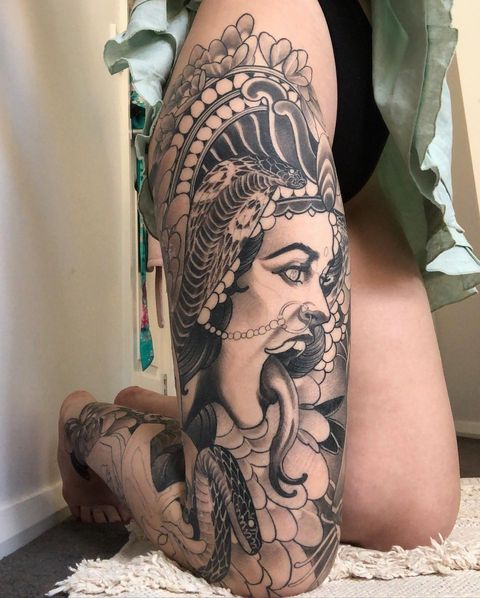
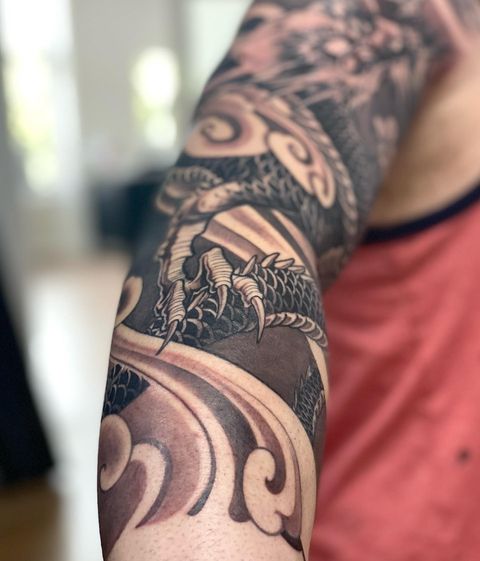
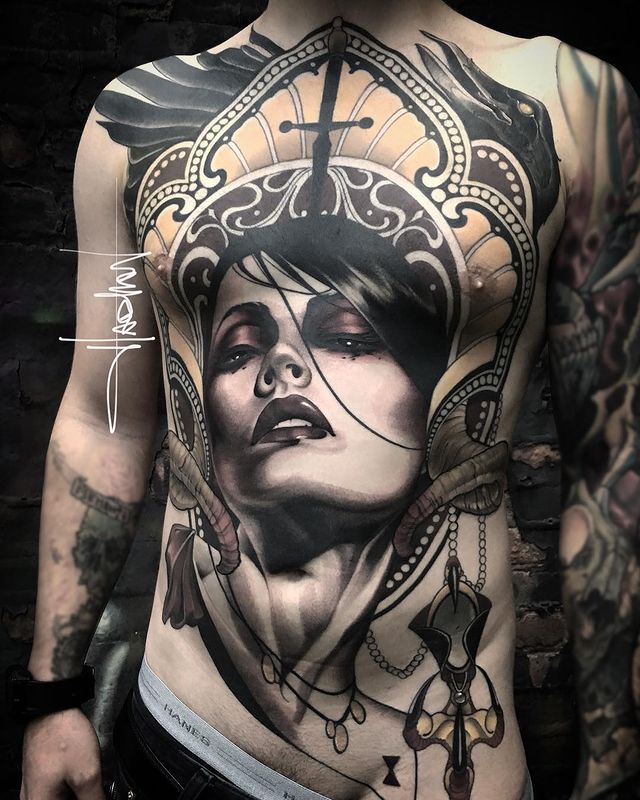
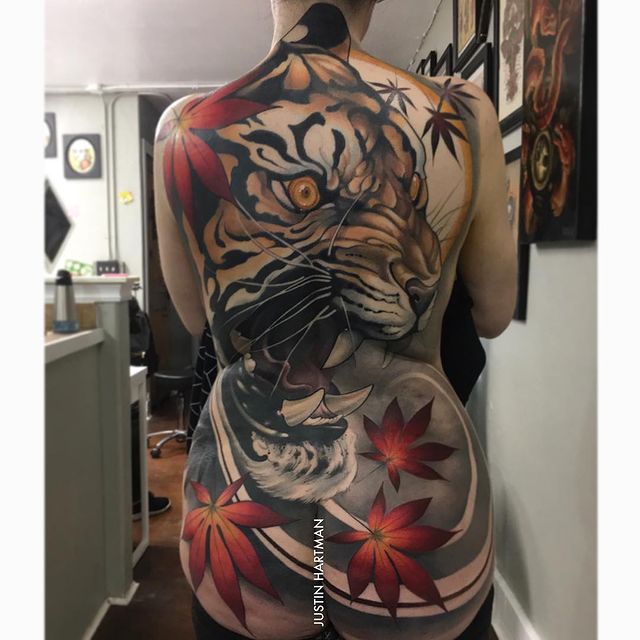
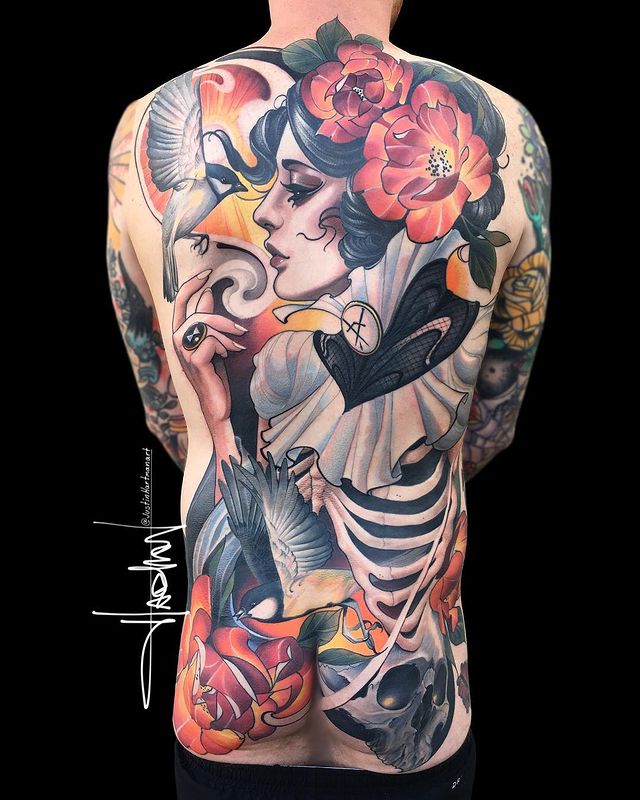
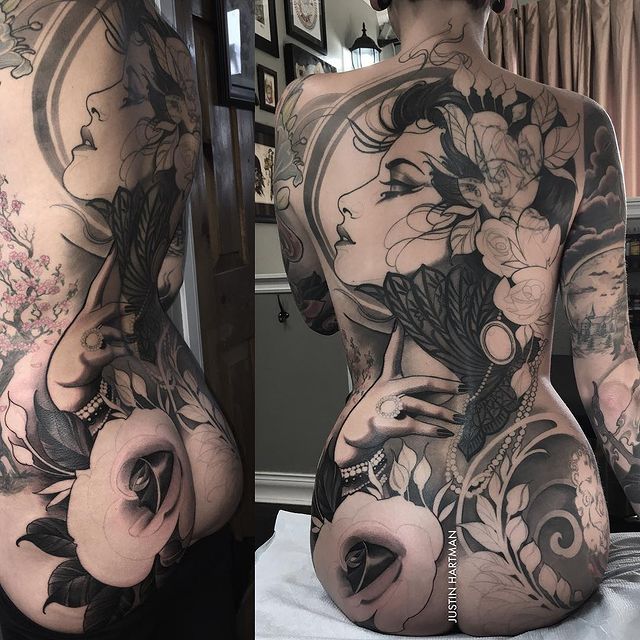
Hartman's tattoo work sits at the intersection of two distinct styles: neotraditional and black & gray. His neotraditional pieces show the hallmarks of the genre. Bold black outlines hold the design together. Color saturation is high, not washed out or pastel. Shading creates dimension without losing the graphic clarity that makes neotraditional tattoos read well from across a room. On the black & gray side, Hartman works with value contrast as his primary tool. Smooth gradients transition from deep black to soft gray washes. Texture and form emerge through careful control of light and shadow rather than through line. What ties both styles together in his portfolio is a commitment to readability. Whether the piece uses full color or works in monochrome, the subject is immediately clear. That clarity comes from strong composition and a willingness to leave breathing room in the design rather than packing every inch with detail.
Popular Motifs & Subjects
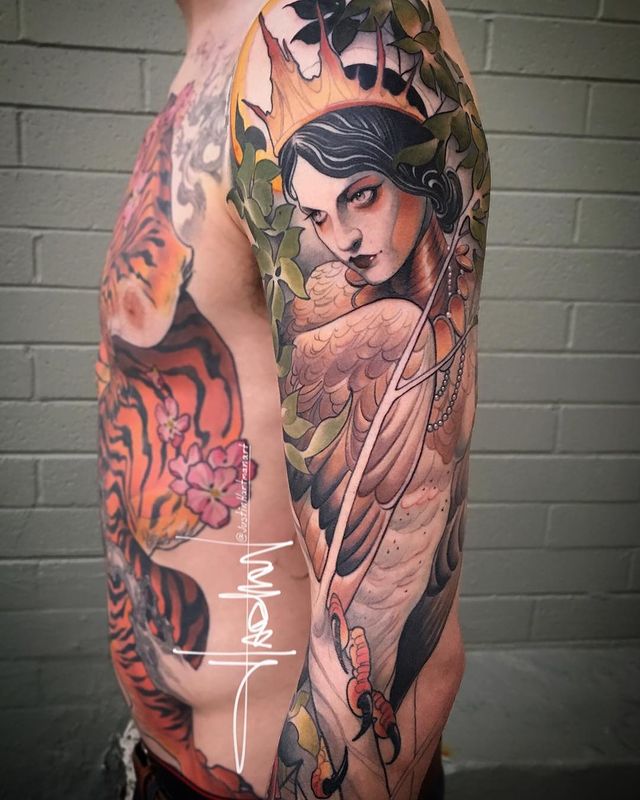
Neotraditional tattooing favors subjects with natural visual weight and texture. Animals are a staple, especially those with distinctive fur, feathers, or scales. Lions, wolves, eagles, and snakes appear frequently in Hartman's style because they hold bold outlines and saturated color well. Botanical imagery is another core motif. Roses, peonies, and other large-petal flowers give artists room to show off shading transitions and color depth. Portraiture also fits the neotraditional approach, particularly female faces framed by decorative elements like flowers or jewelry. In black & gray, the subject matter often shifts toward realism. Skulls, religious iconography, and photographic reference material all benefit from value-based rendering. Hartman's Instagram feed shows a mix of these motifs, with animal subjects and floral compositions appearing regularly. The common thread is that each subject is chosen for how well it translates into a lasting, readable tattoo rather than how it looks on a screen.
Placement & Sizing Considerations
Neotraditional tattoos need space to work. The style relies on bold outlines and saturated color, both of which spread slightly under the skin over time. A small neotraditional piece can look muddy within a few years because the lines and colors merge as the tattoo ages. Hartman's work tends to perform best at medium to large scale, where the design has room for internal detail without crowding. Common placements for his style include the outer arm, thigh, calf, and back. These areas offer flat, stable skin that holds clean lines and smooth shading. Black & gray work has slightly more flexibility with sizing because value transitions can be more subtle than color fills. Even so, going too small risks losing the detail that makes the piece worth doing in the first place. Quick tip: if you are considering a neotraditional piece from Hartman, bring placement flexibility to your consultation. The best design for your idea might not fit where you initially pictured it.
Choosing an Artist for Neotraditional Work
Picking the right artist for a neotraditional tattoo comes down to three things. First, look at healed work, not just fresh photos. A tattoo looks sharp on day one, but healed results show how the artist handles saturation and line weight over time. Scroll through Hartman's Instagram for healed examples or ask to see them during a consultation. Second, check that the artist's style matches your vision. Neotraditional covers a wide range, from graphic and poster-like to soft and painterly. Hartman's work leans toward bold saturation and clean structure, so if you want something more delicate or watercolor-inspired, his style may not be the closest fit. Third, communicate clearly. Bring reference images that show the subject and mood you want, not exact copies of other tattoos. Hartman's booking process runs through his website and Instagram. Reach out with your idea, placement, and size preferences. The real question is whether your concept fits his strengths. If it does, you will get a tattoo that ages well and reads clearly for decades.
Explore more
Frequently Asked Questions
What tattoo styles does Justin Hartman specialize in?
Justin Hartman specializes in neotraditional and black & gray tattooing. His neotraditional work combines bold outlines with vivid color and illustrative detail, while his black & gray pieces focus on smooth shading and realistic value transitions.
Where is Justin Hartman located?
Justin Hartman is based in San Diego, California. He works independently in the San Diego area. Contact him directly through his website or Instagram to confirm his current studio location.
How do I book a tattoo appointment with Justin Hartman?
Reach out to Justin Hartman through his website at justinhartmanart.com or his Instagram @justinhartmanart. Booking details, consultation requirements, and current availability should be confirmed directly with the artist.
How much does Justin Hartman charge for a tattoo?
Pricing details, including hourly rates and minimums, are not publicly listed. Contact Justin Hartman directly through his website or Instagram to discuss pricing for your specific project.
Does Justin Hartman accept walk-in appointments?
Walk-in availability has not been confirmed. Given the demand suggested by his following, appointments are likely scheduled in advance. Contact the artist directly to ask about walk-in policies or last-minute openings.