Kyle williams / Tattoo artist
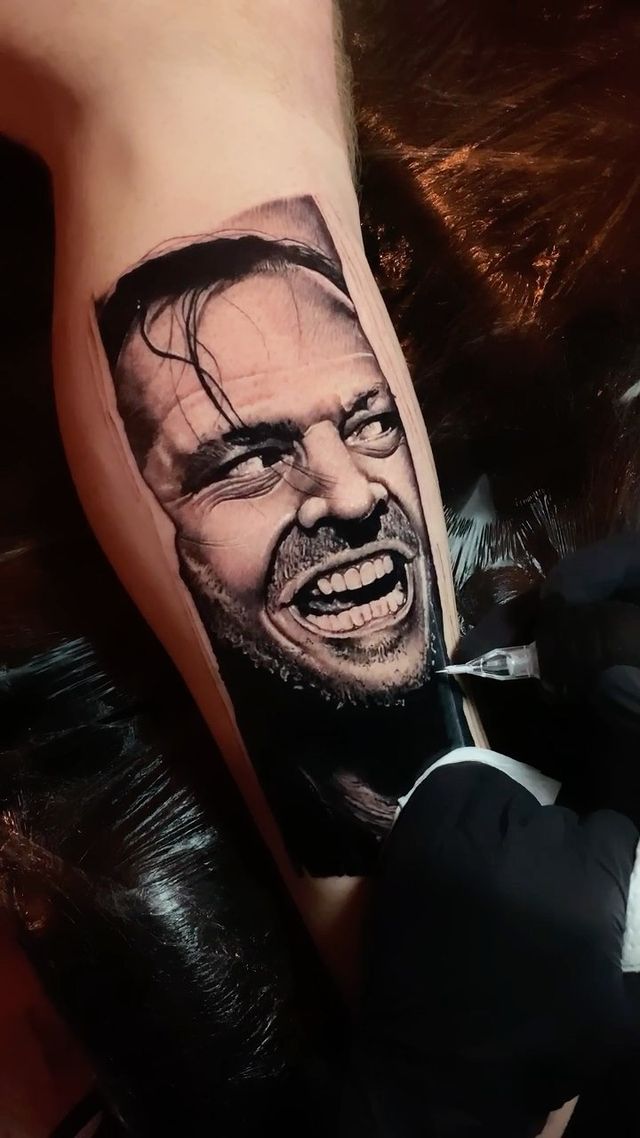
Kyle Williams is a profoundly talented tattoo artist based in Macclesfield, United Kingdom, and is particularly known for his mastery in black & gray and realism styles. His remarkable skill level is widely recognized and admired by a sizable following of over 130,000 enthusiasts on Instagram. Williams' works demonstrate not only high technical ability but also a profound artistic sense and a sharp eye for details.
Kyle Williams, known online as egg_ink, is a black & gray realism tattoo artist based in Macclesfield, England. With over 134,000 Instagram followers, his work centers on photorealistic rendering, smooth gradient shading, and meticulous detail. His portfolio leans heavily into portrait work, animal studies, and figurative pieces executed entirely in black and gray ink. Williams operates independently and books clients through his Big Cartel site. For appointment availability, pricing, and consultation details, contact him directly via Instagram or his website.
Black & Gray Realism: What Sets This Style Apart
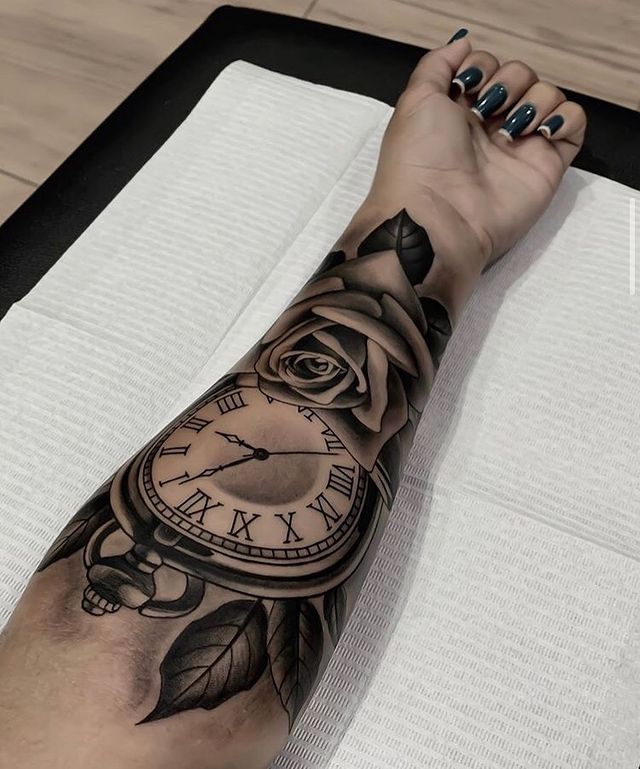
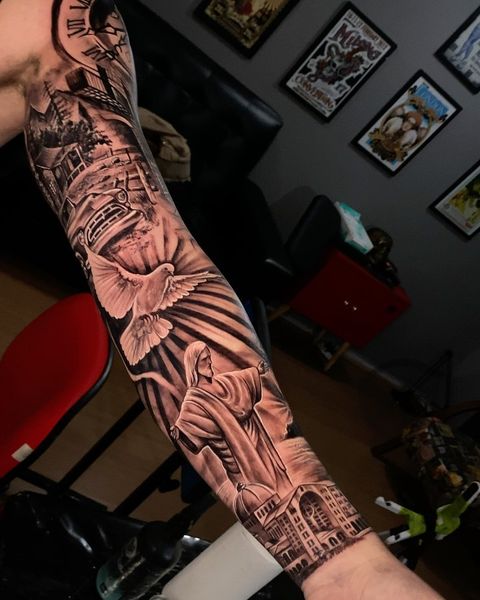
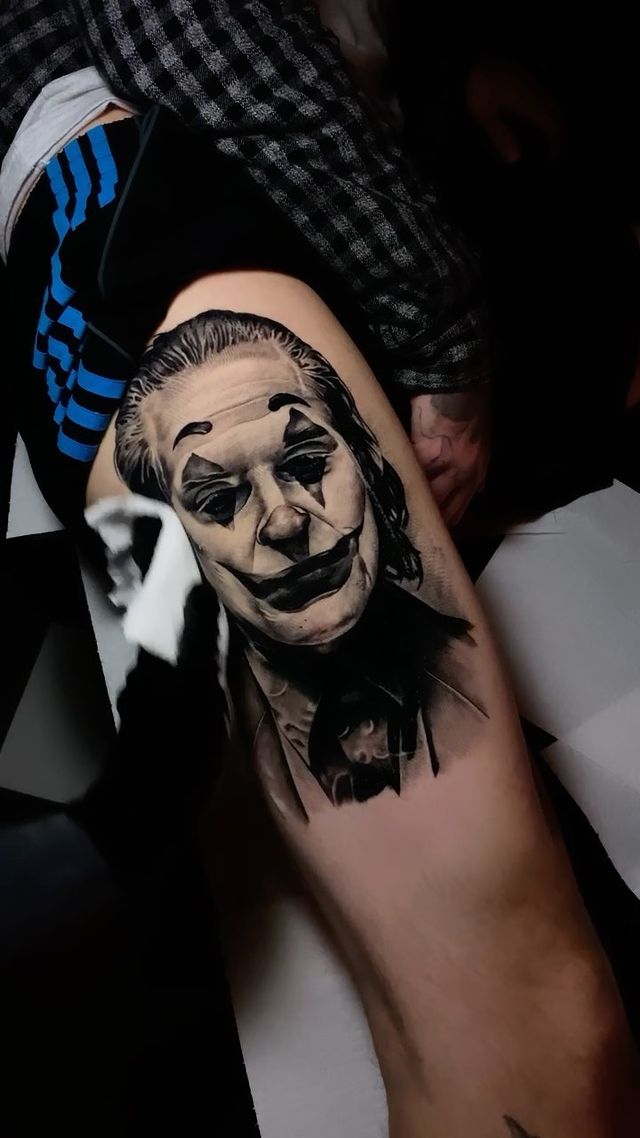
Black & gray realism sits at the intersection of technical precision and artistic restraint. The style strips away color entirely, relying on dilution ratios, needle groupings, and hand speed to build depth and dimension from nothing but black ink and skin. Kyle Williams works within this discipline, producing tattoos that read more like photographs than drawings. The approach demands patience. A single portrait session can stretch for hours as layers of gray wash build up gradually, each pass adding subtlety to skin tones, shadows, and highlights. There is no color to hide behind. Every transition has to hold up on its own. Realism in black & gray also requires a deep understanding of light. The artist decides where the light falls, how soft the shadows cast, and where the contrast snaps sharp. When done well, the result looks like a silver-gelatin print transferred onto living tissue. Williams has built his reputation on exactly this kind of work.
Signature Techniques and Visual Approach
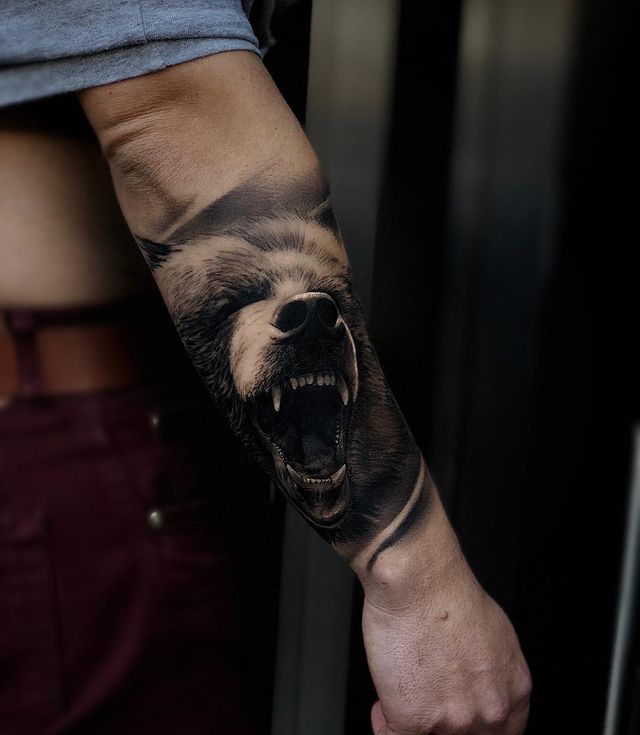
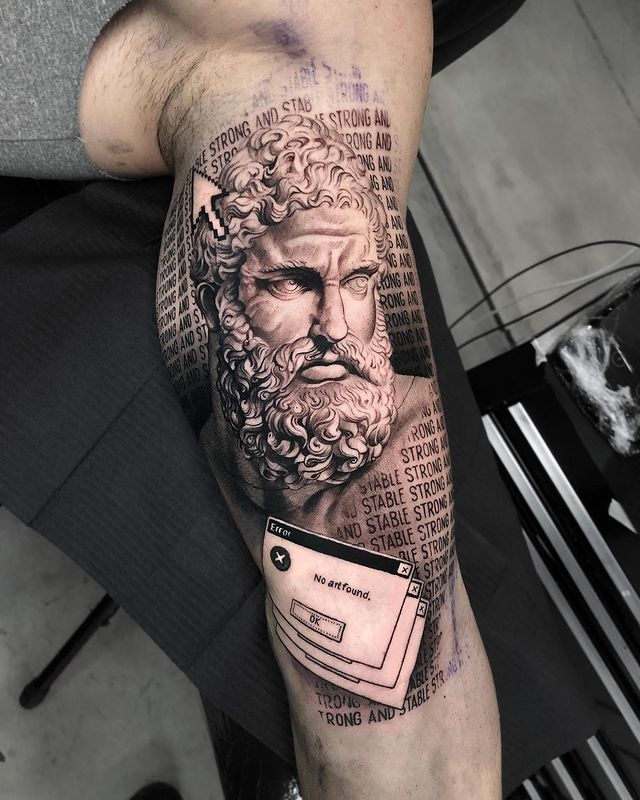
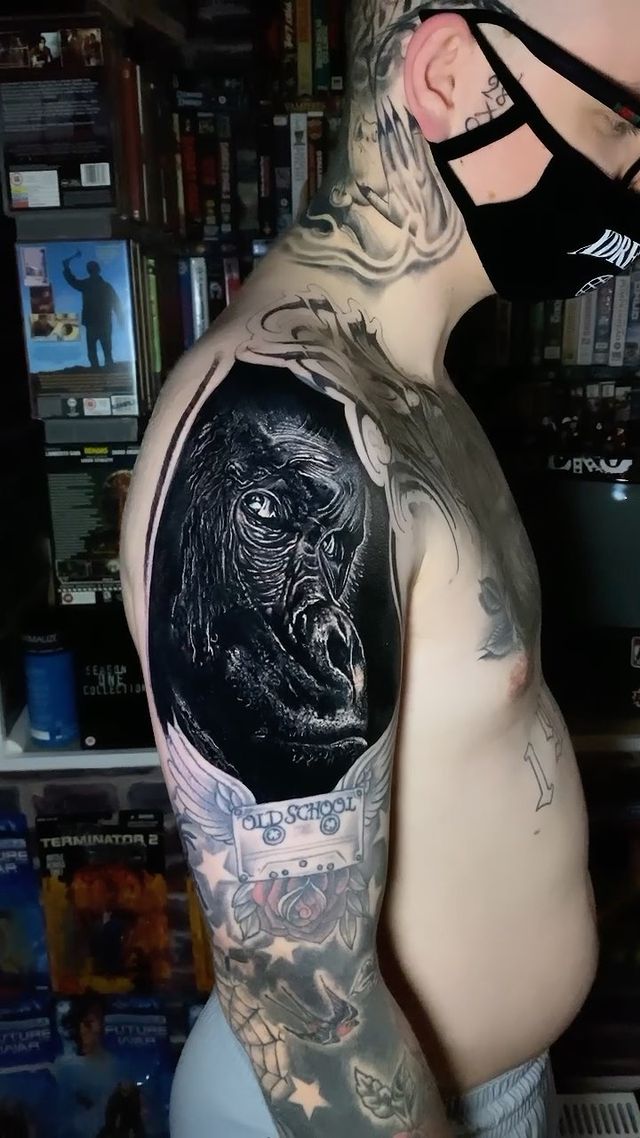
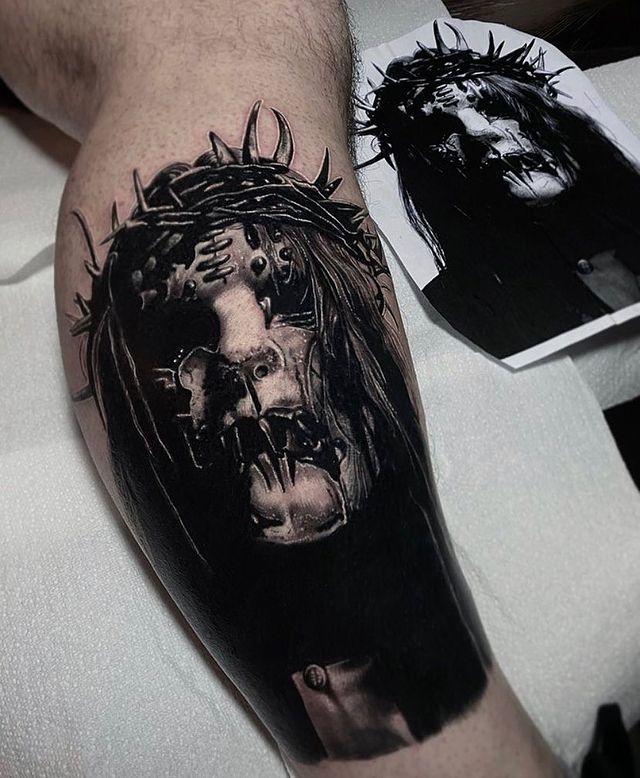
Scroll through Kyle Williams' Instagram and a few patterns emerge quickly. His portraits carry an almost sculptural weight. Cheekbones, brow ridges, and jawlines are rendered with shading so smooth that the transitions feel airbrushed rather than tattooed. He works with tight needle configurations for fine detail, then opens up to larger magnums for broad gradient passes. The contrast in his pieces tends to run high. Deep blacks anchor the darkest zones, while the lightest grays stay restrained enough to let the skin itself serve as the highlight. This push toward strong value contrast gives his tattoos real punch, even from across a room. Animal studies show up often in his feed. Fur texture, wet reflections in eyes, and the musculature beneath the skin all get the same meticulous treatment as his human subjects. The consistency across subjects speaks to a disciplined process. Each piece follows a similar build: tight linework or stencil placement first, then layered shading that tightens and refines with every pass.
Popular Motifs and Subject Matter
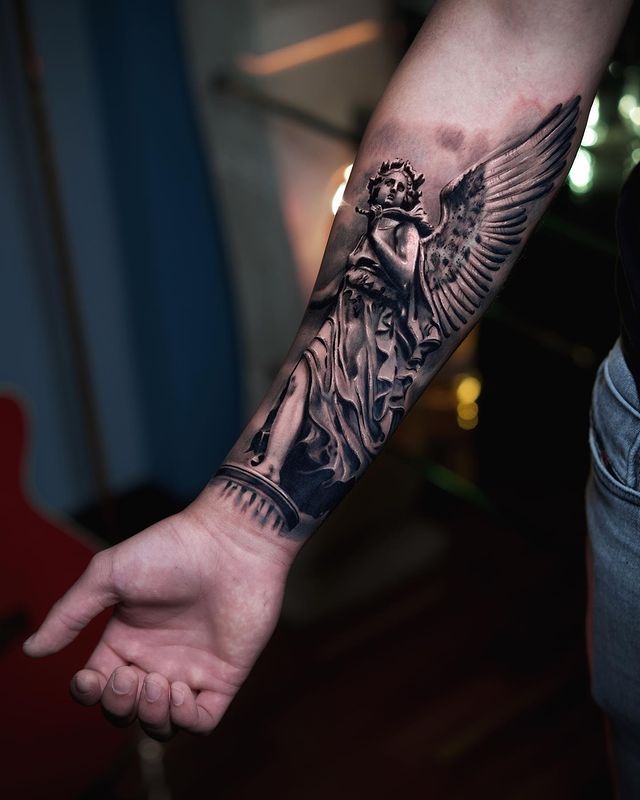
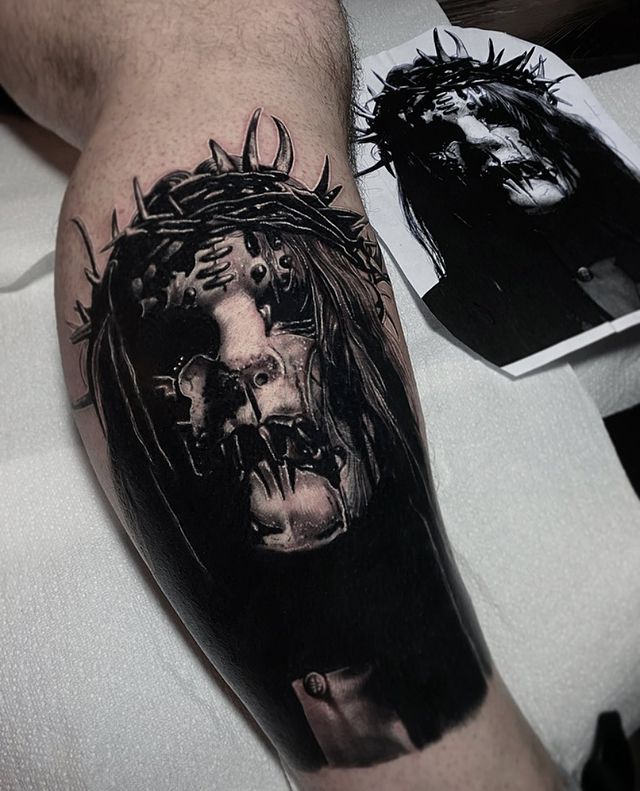
Williams' portfolio leans into a handful of recurring subjects. Portraits dominate, ranging from celebrity likenesses to personal commissions of family members and loved ones. These are the pieces that test a realism artist most directly because viewers instantly know when a face looks off. Animal portraits follow close behind. Dogs, big cats, birds, and horses all appear regularly, often framed as close-cropped head studies that fill the available space. The tight cropping lets him maximize detail in the eyes, nose, and fur texture without needing to compose a full-body scene. Figurative work rounds out the core of his output. Hands, torsos, and partial figures show up in compositions that emphasize anatomy and light over narrative. These pieces tend to be more atmospheric, with looser backgrounds fading into the skin. Religious iconography, classical sculpture references, and skull motifs also surface periodically. Whatever the subject, the treatment stays consistent: high contrast, smooth gradients, and a photorealistic finish that prioritizes accuracy over stylization.
Placement and Sizing Considerations
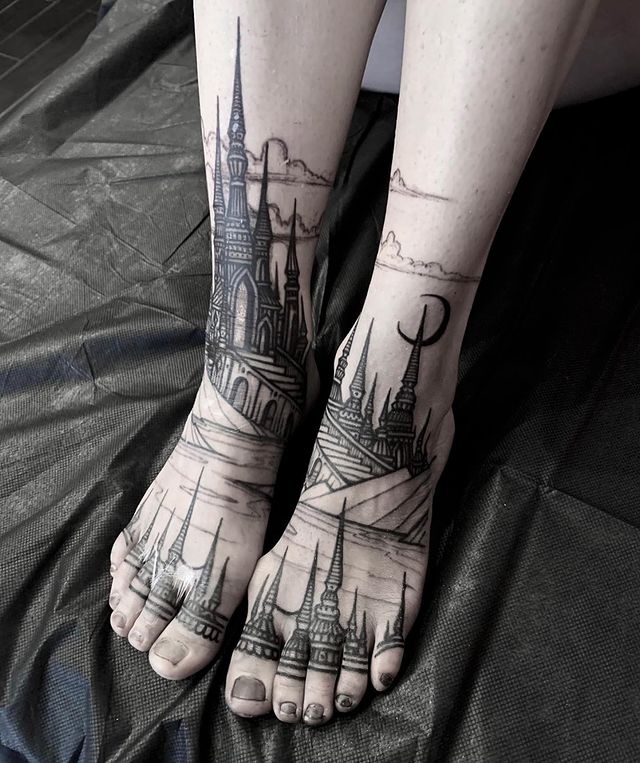
Realism at the level Kyle Williams produces demands space. The detail in a photorealistic portrait simply cannot hold up at three inches tall. Most of his larger pieces occupy the inner forearm, upper arm, thigh, or back, where the canvas is flat and the skin stretches evenly. Smaller pieces do appear in his portfolio, but even those tend to be medium-sized rather than truly small. A compact animal study on a forearm still needs enough room for the eye highlights and fur direction to read clearly. If you are considering a realism piece on a smaller area like the wrist or ankle, talk to him about what level of detail is realistic for that size. Placement also affects how the tattoo ages. Areas with frequent sun exposure or friction will soften faster. Upper arms and thighs tend to hold detail longer than hands or feet. Williams can advise on the best placement for your specific design during a consultation.
Working With a Realism Specialist
Booking with an artist who focuses exclusively on black & gray realism comes with certain expectations. Reference photos matter more here than in almost any other style. Williams will likely ask for clear, high-resolution images of the subject you want tattooed. The better the reference, the more accurately he can translate it onto skin. Be ready to trust the process. Realism artists often adjust contrast, crop, or recompose reference material to make it work as a tattoo. A direct copy of a photo does not always translate well because skin is not paper. The artist makes judgment calls about what to emphasize and what to simplify. Communication before the session is key. Reach out through his website or Instagram with your idea, placement, and size. He will let you know if the concept fits his style and current availability. For pricing, session length, and deposit requirements, contact him directly. Rates for realism work typically reflect the time and precision involved, and each piece is priced based on its specific demands.
Finding the Right Realism Artist for You
Not every black & gray artist works the same way. Some lean toward illustrative realism with visible line work and stylized shading. Others, like Williams, push toward photorealism where the goal is making the tattoo look indistinguishable from a photograph. Knowing which end of that spectrum you prefer helps narrow your search. Look closely at healed photos, not just fresh work. Black & gray realism can soften as it heals, and an artist whose healed pieces still hold sharp detail is one worth pursuing. Williams' Instagram feed includes both fresh and healed examples, which gives you a realistic sense of how his work settles into the skin over time. If you are in the Macclesfield area or willing to travel within the UK, Williams represents a strong option for black & gray realism. For a broader search, browse the artist directory to compare portfolios, styles, and locations. Finding the right fit means matching your aesthetic expectations with an artist whose natural style aligns with your vision.
Explore more
Frequently Asked Questions
How do I book a tattoo with Kyle Williams?
Kyle Williams books through his website at eggink.bigcartel.com. You can also reach out via his Instagram @egg_ink to inquire about appointments. Contact him directly for current availability and booking requirements.
What style of tattoos does Kyle Williams do?
Kyle Williams specializes in black & gray realism. His work features smooth shading gradients, photorealistic detail, and high-contrast rendering without color. Common subjects include portraits, animals, and figurative designs.
Where is Kyle Williams based?
Kyle Williams works out of Macclesfield, England, in the United Kingdom. He operates as an independent artist. Contact him directly to confirm his current studio location.
How much does a tattoo from Kyle Williams cost?
Pricing for Kyle Williams is not publicly listed. Rates for black & gray realism work vary based on size, detail, and session length. Contact the artist directly through his website or Instagram for a quote.
Does Kyle Williams do color tattoos?
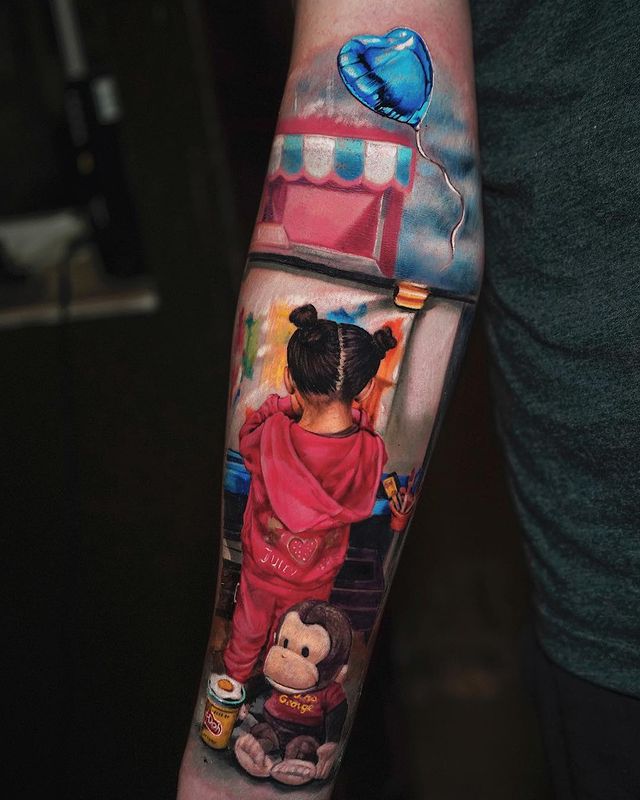
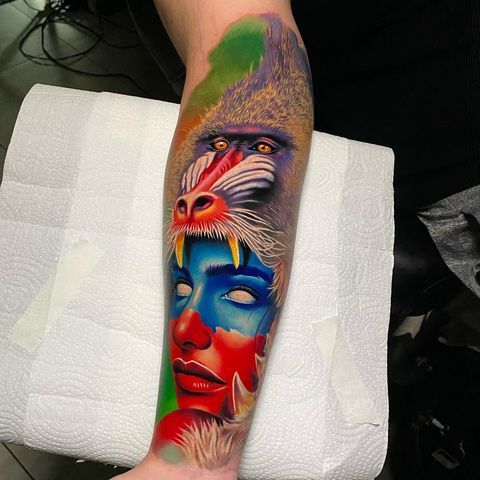
Kyle Williams focuses on black & gray realism. His published portfolio showcases work done entirely in black and gray ink. If you are interested in color work, reach out to him directly to discuss whether he takes on color projects.