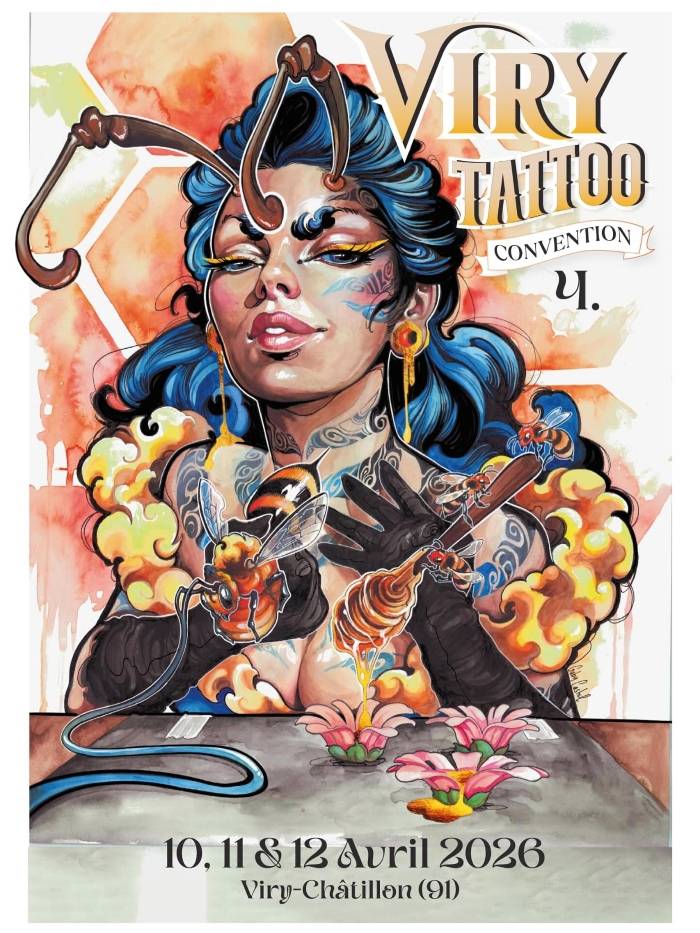
4th Viry Tattoo Convention
The 4th Viry Tattoo Convention ran from April 9 to April 11, 2001 at the Halle des Sports de Viry-Châtillon in Viry-Châtillon, Île-de-France. This three-day event marked the fourth edition of the convention, establishing it as a recurring fixture in the Paris suburbs tattoo scene during the early 2000s. The convention occupied the municipal sports hall in Viry-Châtillon, a commune located approximately 20 kilometers southeast of central Paris in the Essonne department. In 2001, the French tattoo scene was gaining momentum after decades of underground status following legalization in the 1990s. Suburban conventions like this one provided accessible gathering points for artists and collectors outside the capital's core, where rents were lower and spaces more available. Attendees encountered live tattooing stations where artists worked on clients throughout the weekend. The floor plan included vendor booths selling tattoo equipment, flash sheets, and body jewelry. Competitions formed part of the schedule, with categories for large pieces, black and grey work, and color tattoos judged by attending professionals. These contests allowed artists to display their portfolios and build reputations within the French tattoo community. The venue offered basic amenities typical of municipal sports complexes in early 2000s France: concrete floors, high ceilings, and fluorescent lighting. Visitors paid entry at the door, with weekend passes and single-day tickets available. Parking was available in the surrounding residential areas and dedicated lots near the sports complex. The location was accessible via public transportation from Paris, though late-night return travel required planning around suburban train schedules. Viry-Châtillon sits in the Essonne department, part of the larger Paris metropolitan area. In 2001, this region had a growing community of tattoo artists operating between Paris proper and the farther suburbs, distinct from the more established shops in the capital's center. The convention reflected the geographic spread of tattoo culture beyond Paris intra-muros, catering to clients from the southern suburbs and neighboring departments who sought tattoo services closer to home. The event represented a specific moment in French tattoo history, when the industry was professionalizing but still maintained close ties to its underground roots. Artists working at the convention would have included both established Paris studio owners and independent operators from the surrounding regions.